5 March 2026 · Action Cameras · AI-assisted · published by Jaco Olwagen · How we rank
Action Camera Buyer's Guide for Australia (2026)
A practical guide to choosing an action camera for Australian conditions, covering waterproofing, dust resistance, heat tolerance and the major brands.
Quick Picks - Best Action Cameras for Australia
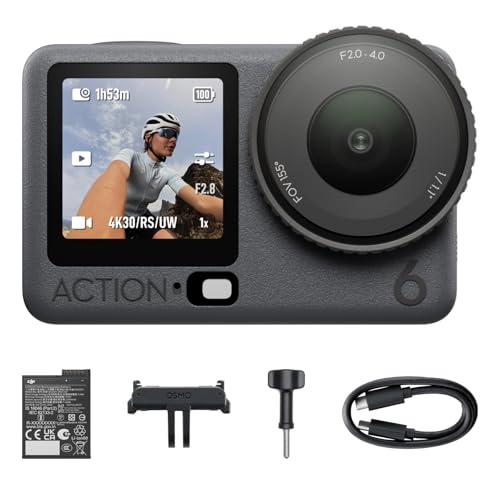
 DJI Osmo Action 6Check Price
 If you just want the shortlist before reading the full guide, these are the three we'd recommend most Aussie buyers start with on Amazon AU. Prices are a guide only - tap through for the live price.
| Action Camera | Best For | Approx Price (AUD) |
|---|---|---|
| DJI Osmo Action 6 | Best all-rounder (battery, sensor, value) | ~A$549-649 |
| GoPro HERO13 Black | Best for surf and water sports | ~A$549-599 |
| Insta360 Ace Pro 2 | Best image quality (Leica lens) | ~A$549-599 |
Built for Aussie Conditions
Australia is one of the best countries in the world for action cameras, and also one of the hardest on them. Between saltwater surf, red outback dust, and summers that regularly push past 40 degrees, your action camera needs to handle conditions that would make a regular camera weep. The good news is that the current generation of action cameras is more capable than ever. The challenge is picking the right one for how you'll actually use it.
We've compared the leading options against the conditions Aussie users actually face - reef snorkelling in Queensland, mountain biking in the Blue Mountains, four-wheel-driving through central Australia, and surfing on the Victorian coast - using published specs, professional reviews and owner feedback rather than our own hands-on testing. Here's what holds up and what matters.
What Matters for Australian Use
Waterproofing
This is non-negotiable for most Aussie buyers. If you're surfing, snorkelling, paddleboarding, or just want peace of mind at the beach, your action camera needs to handle submersion without a separate housing.
Most current action cameras are waterproof to 10 metres without a case. That's enough for snorkelling on the Great Barrier Reef, pool sessions, and general water sports. If you're diving deeper, you'll need a dedicated dive housing, which adds A$50-$100 and extends depth ratings to 40-60 metres.
A critical note for Aussie ocean users: saltwater is more corrosive than freshwater. After every ocean session, rinse your camera thoroughly in fresh water and leave the battery door open to dry. This isn't optional - it's the difference between a camera that lasts years and one that corrodes within months. Pay particular attention to the USB-C port cover and battery door seals.
Dust and Heat Resistance
If you're taking an action camera into the outback, on a camping trip, or on any unsealed road, dust is your enemy. Fine Australian dust gets into everything. Most action cameras aren't specifically rated for dust resistance, but sealed units with minimal exposed ports hold up better than cameras with lots of crevices.
Heat is the other challenge. Action cameras generate significant heat during recording, especially at high resolutions (4K and above). When ambient temperatures hit 35-40+ degrees, which is a normal summer day in much of Australia, overheating becomes a real issue. Cameras will throttle performance, reduce recording time, or shut down entirely.
Practical tips for hot conditions:
- Keep the camera in shade when not recording
- Remove it from mounts (which trap heat) between takes
- Use lower resolution modes (2.7K instead of 4K) for longer recording sessions in heat
- Avoid leaving your camera in a parked car - dashboard temperatures can exceed 70 degrees and will damage the battery and internals
The Big Three: GoPro vs DJI vs Insta360
GoPro (Hero13 Black)
 Hero13 BlackCheck Price
 GoPro is the name most Australians think of first, and the Hero13 Black is a mature, reliable camera. It's the safe choice, and that's not a bad thing.
Strengths: GoPro's image stabilisation (HyperSmooth) is excellent and handles mountain bike trails and surfing with ease. The ecosystem is massive - mounts, accessories, and third-party add-ons are available everywhere in Australia, from Anaconda to any camera shop. The GoPro subscription (roughly A$75/year) includes unlimited cloud backup and no-questions-asked camera replacement, which is genuinely useful for a device you're regularly throwing into dangerous situations.
Weaknesses: GoPro has been iterating rather than innovating in recent years. The camera is very good, but it's not dramatically better than the Hero12 or even the Hero11. Battery life remains mediocre - expect 45-70 minutes of continuous 4K recording. The GoPro app has improved but can still be frustrating for transferring large files.
Best for: Buyers who want maximum accessory compatibility, reliable performance, and the security of the GoPro subscription replacement program. Surfers and water sports enthusiasts in particular benefit from GoPro's proven waterproofing track record.
Australian pricing: A$549-$599 for the Hero13 Black. The subscription adds A$75/year.
DJI (Osmo Action 6)
DJI's Osmo Action 6 is a significant leap from its already strong predecessor, and it now competes with - and in several areas surpasses - GoPro for the top spot in the action camera market.
Strengths: The headline upgrade is a larger 1/1.1-inch sensor paired with a variable aperture system (f/2.0 to f/4.0) - the first variable aperture in any action camera. This gives creative control over exposure and depth of field that no other action camera offers. Battery life takes another step forward, with approximately 4 hours of continuous recording on a single charge - no competitor comes close. 8K video recording gives plenty of cropping headroom in post-production. Low-light performance remains noticeably better than GoPro, which matters for dawn surf sessions and dusk trail rides. The dual touchscreen system is retained and refined.
Weaknesses: Price has increased over the previous generation, narrowing the value gap versus GoPro. The accessory ecosystem is still smaller than GoPro's, though many GoPro mounts work with adapters. DJI's Australian support infrastructure is improving but still not as established as GoPro's.
Best for: Buyers who want the best overall performance package. Mountain bikers, hikers, and 4WD adventurers benefit most from the outstanding battery life. The variable aperture is a genuine creative tool for anyone who edits their footage.
Australian pricing: A$549-$649 for the Osmo Action 6 Standard Combo.
Insta360 (Ace Pro 2 / X4)
 Ace Pro 2Check Price
 Insta360 offers two distinct approaches: the Ace Pro 2 is a traditional action camera competitor, while the X4 is a 360-degree camera that lets you reframe footage after the fact.
The Ace Pro 2 competes directly with GoPro and DJI. Its standout features are 8K video, the Leica-tuned lens, and a larger sensor than its competitors, which produces noticeably better image quality in good light. It also has a flip-up screen for vlogging. The image stabilisation is excellent and comparable to GoPro's HyperSmooth.
The X4 is a different beast entirely. It records in 360 degrees, and you choose your framing afterwards in the app. This sounds like a gimmick, but it's genuinely useful in practice - you never miss the shot because you were pointing the wrong way. For motorcycle riding, skiing, and activities where the action happens all around you, it's brilliant. The trade-off is lower per-pixel quality compared to a traditional action camera, since the sensor covers a full 360-degree view.
Best for: The Ace Pro 2 suits buyers who prioritise image quality and want a more cinematic look from their action camera. The X4 is ideal for motorsports, skiing, and anyone who wants the flexibility of 360-degree footage. Both work well for Australian conditions.
Australian pricing: Ace Pro 2 around A$549-$599. X4 around A$699-$749.
Australian-Specific Use Cases
Surfing and Ocean Sports
Any of the big three will work, but GoPro has the longest track record in salt water and the best mouth-mount options for surfing. The GoPro subscription replacement program is particularly valuable here - cameras do get lost in the ocean, and knowing you can get a replacement takes the sting out.
Reef Snorkelling and Diving
For casual snorkelling (under 10 metres), all current action cameras work without a housing. For scuba diving, you'll need a dedicated dive housing. GoPro has the widest range of dive accessories. The DJI Osmo Action 6 also has solid dive housing options - DJI even sells a dedicated Freediving/Snorkeling combo for it. Consider a red filter for your dive housing to correct colour at depth - underwater footage without one looks washed out and blue.
Outback and 4WD
Battery life and heat tolerance matter most here. The DJI Osmo Action 6's outstanding battery life - up to 4 hours on a single charge - makes it the best choice for long days on dirt roads. Bring at least two spare batteries and a portable charger. Mount the camera externally for exterior shots, but bring it inside the vehicle when not recording - dust and heat will wear it down faster than any water sport.
Mountain Biking and Trail Running
Image stabilisation is everything on rough trails. GoPro and DJI both excel here. Chest mounts generally produce better footage than helmet mounts for trail riding - less vertical bobbing and a more natural perspective. The DJI's better low-light performance is an advantage for riding through dense bush where light levels can change rapidly.
Our Recommendation
For the average Aussie buyer who wants one action camera that handles everything:
- Best overall: DJI Osmo Action 6. Outstanding battery life of up to 4 hours, a larger sensor with variable aperture, and excellent image quality. The best all-rounder for Australian conditions.
- Best for water sports: GoPro Hero13 Black. The ecosystem, mount selection, and subscription replacement program make it the safest bet for ocean use.
- Best image quality: Insta360 Ace Pro 2. If you care about how your footage looks more than anything else, the larger sensor and Leica lens deliver.
- Most unique: Insta360 X4. The 360-degree approach gives you creative options no traditional action camera can match.
Whichever you choose, budget an extra A$50-$100 for essential accessories: spare batteries, a decent mount kit, and a microfibre cloth for keeping the lens clean. And remember the golden rule for Australian conditions - rinse after salt water, shade when it's hot, and always have a spare battery.
Thinking About a Proper Camera Instead?
Action cameras are brilliant for the activity itself, but they're specialised tools. If you're increasingly finding yourself wanting better image quality, shallow depth of field, or the ability to shoot everything from portraits to landscapes to wildlife, it might be time to look at a proper camera system. Our beginner's guide to mirrorless cameras in Australia walks through sensor sizes, lens mounts, and which entry-level mirrorless bodies are actually worth buying as your first dedicated camera - and when a mirrorless setup complements (rather than replaces) your action camera. You can also browse our Top 7 Cameras shortlist for the best all-round picks. If you're specifically shopping for the surf, our best action cameras for surfing in Australia guide covers ocean-specific considerations in detail.
Top Picks - Check Latest Prices


See Our Top 7 Action Cameras for Australia
Hand-picked and ranked by our editors — with honest pros, cons, and Aussie pricing.
More Action Cameras Reading
Weekly AU tech deals, in your inbox
We check prices on every product we cover daily. Once a week we send the biggest genuine price drops we spot - the ones worth your attention.
- One email a week, max
- No spam, ever
- Unsubscribe in one click