14 April 2026 · Wearables · AI-assisted · published by Jaco Olwagen · How we rank
Best GPS Running Watch Australia 2026: Garmin, COROS and Polar Compared
The best GPS running watches in Australia for 2026 - Garmin, COROS and Polar compared with real AUD prices. Find your perfect training partner.
Best GPS Running Watch Australia 2026
April in Australia means one thing for runners: the air's finally cooled down, the morning light is doing that golden thing again, and the urge to lace up and clock some proper kilometres is back. It also means a lot of people are finally buying the GPS running watch they've been putting off all summer. Whether you're training for your first 10K or planning an ultra through the Blue Mountains, the right watch makes a genuine difference - not just to your data, but to how much you enjoy getting out the door.
This guide covers the best GPS running watches available in Australia right now, with prices in AUD and links to Amazon AU. For smartwatch comparisons including Apple Watch and Samsung Galaxy Watch, head to our top 7 wearables picks. GPS running watches are a different beast - purpose-built for athletes, not for checking Instagram.
Quick Picks - Best GPS Running Watches Australia 2026
| Watch | Best For | Price (AUD) |
|---|---|---|
| COROS PACE 4 | Best battery life | ~A$500 |
| Garmin Forerunner 165 | Best beginner GPS watch | ~A$299–$329 |
| Polar Pacer Pro | Best for training analysis | ~A$285–$389 |
| Garmin Forerunner 265 | Best mid-range all-rounder | ~A$650–$700 |
What Makes a GPS Running Watch Different?
A GPS running watch isn't a smartwatch with a running app bolted on. The difference is in the basics: GPS accuracy, battery life, and the quality of training data. A dedicated running watch will track your pace, heart rate zones, cadence, stride length, and recovery time with a level of precision that an Apple Watch simply isn't designed to match. And crucially, the battery lasts long enough to get you through a marathon - or a long-distance run through Ku-ring-gai Chase - without dying somewhere between Bobbin Head and the car park.
If you're also weighing up whether a running watch or a fitness tracker better suits your lifestyle, our fitness tracker vs smartwatch comparison has you covered. But if running is your thing, a purpose-built GPS watch is worth every cent.
COROS PACE 4 - Best Battery Life in a GPS Running Watch
 COROS PACE 4Check Price
 The PACE 3 that used to sit here has run out on Amazon AU, and COROS replaced it with the PACE 4. The headline number is battery: 41 hours of continuous GPS and up to 19 days of ordinary daily use. A 50K in the Blue Mountains does not get close to flattening it, and most runners charge it about as often as they change the sheets.
The other change is the screen. Where the PACE 3 ran a memory-in-pixel display, the PACE 4 uses a 1.2-inch AMOLED touchscreen with a tapered edge and, by COROS's own figures, 164% more resolution than the outgoing model. It is a nicer thing to read at night, and it closes the gap with the Garmins on looks. A 6000-series aluminium bezel keeps the weight down to 33 grams with the nylon band, which is still lighter than nearly every Garmin at this price.
Control is a digital crown plus two buttons and a customisable action button, so you are not poking at a touchscreen with wet hands mid-interval. The new party trick is voice: you can record a voice pin during a run - how the legs felt, where the wind turned - and it lands in the training log at the end of the activity. The COROS app remains one of the cleaner experiences in the category, less dense than Garmin Connect, which is either a feature or a limitation depending on how deep into the data you want to go.
The good: 41-hour GPS battery, 33 grams on the wrist, a proper AMOLED screen, and physical controls that work in the rain.
The trade-off: At around $500 it is no longer the budget pick it was, and the COROS ecosystem still has fewer third-party integrations than Garmin.
AUD Street Price: ~$499.95 (Amazon AU, COROS AU direct, Pure Running AU)
Garmin Forerunner 165 - Best Beginner GPS Running Watch
 Garmin Forerunner 165Check Price
 Garmin's Forerunner 165 is the entry point into the Garmin ecosystem, and it's a cracking watch for anyone who's starting out with GPS training or upgrading from a basic fitness band. The RRP is $429 AUD, but street pricing on Amazon AU regularly brings it down to the $299–$329 range - making it sharp value compared to its older siblings in the Forerunner line.
The standout feature at this price is the AMOLED touchscreen. It's bright, clear, and readable in any conditions - a genuine step up over the MIP displays you get on the Polar Pacer Pro or the older Forerunner 55. The display makes it feel like a premium watch even when you're just checking your splits mid-run, and it transitions from workout mode to a clean watch face without looking like a beeper from 2003.
Garmin's suggested workout feature is genuinely useful for beginners: the watch analyses your recent activity, recovery, and fitness level and recommends a specific workout each day - easy run, tempo intervals, recovery walk, or rest. It takes the guesswork out of structuring a training week, which is worth a lot if you're building a base for your first half marathon. Battery life is rated at up to 11 days in watch mode (about 19 hours in GPS mode), and you get Garmin Pay for tap-to-pay at local retailers.
The good: Vibrant AMOLED display, smart daily suggested workouts, Garmin's deep health platform, good street pricing versus RRP.
The trade-off: GPS uses single frequency (not dual), so accuracy can drop in dense urban areas compared to a dual-frequency watch.
AUD Street Price: ~$299–$329 street (Amazon AU, Harvey Norman, JB Hi-Fi); RRP $429 AUD
Polar Pacer Pro - Best for Training Data Depth
 Polar Pacer ProCheck Price
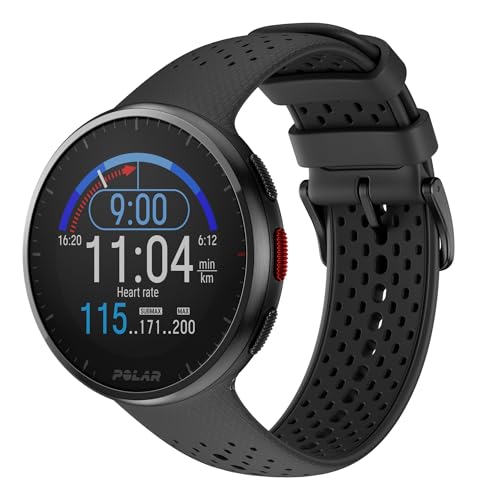
 Polar has been doing heart rate training longer than any brand in the business - their first wearable heart rate monitor came out in 1982, and the training science philosophy running through every Polar watch reflects that legacy. The Pacer Pro is the mid-range expression of that, sitting at around $285–$389 AUD on Amazon AU and aimed squarely at runners who want coaching, not just data.
The watch is ultra-light - 32 grams without the band - and uses an aluminium case that feels more considered than the chunky plastic of budget GPS watches. Battery life is rated at 35 hours in continuous GPS mode and up to 5 days in watch mode, which is competitive but not in COROS territory. What Polar does better than either Garmin or COROS at this price is the running programme tools: FuelWise tracks your fuelling needs during long runs, Running Power (a metric usually locked to premium watches) is standard, and the Polar Flow app provides structured training plans and weekly load analysis.
If you've been doing Heart Rate Zone 2 training or following a structured polarised training programme, the Polar Pacer Pro gives you better tools for that specific approach than either Garmin or COROS at a similar price. If you just want to track your run and connect to Strava, the COROS or Garmin 165 are simpler day-to-day options.
The good: Running Power as standard, excellent training programme tools, lightweight aluminium build, strong long GPS battery life (35 hours).
The trade-off: Smaller app ecosystem than Garmin, no AMOLED display, Polar Flow is less widely used than Garmin Connect or Strava's deep Garmin integration.
AUD Street Price: ~$299–$389 (Amazon AU, Polar AU, Harvey Norman)
Garmin Forerunner 265 - Best Mid-Range GPS Watch
 Garmin Forerunner 265Check Price
 If your budget stretches to $650–$700 AUD, the Forerunner 265 is where the sweet spot really sits for serious recreational runners. It brings everything the Forerunner 165 has - AMOLED display, suggested workouts, Garmin Pay - and adds daily suggested workouts based on Training Readiness, a more sophisticated morning report, and the Training Effect metric that quantifies whether your run built aerobic or anaerobic fitness.
The big upgrade over the 165 is Garmin's Body Battery score integration with sleep data and HRV Status - a detailed measure of how well-recovered you are before a hard session. These aren't gimmicks for runners who care about consistent training; knowing whether to push or back off on a given morning has real value when you're building toward a race. Battery life is rated at 13 days in smartwatch mode and up to 20 hours in GPS mode, with the AMOLED always-on display dropping that to around 10 hours GPS.
At $499 street (check Amazon AU for the best current price), the Forerunner 265 is the watch you buy once and don't replace for three or four years. For runners training for half marathons, marathons, or anyone who takes their weekly mileage seriously, it's the pick.
The good: Full Garmin training ecosystem, AMOLED display, HRV Status and Training Readiness, suitable for racing and long training blocks.
The trade-off: More expensive - and some of the extra features take time to learn. If you run three times a week without a race goal, the Forerunner 165 gets you 80% of the way there for less money.
AUD Street Price: ~$499–$550 (Amazon AU, JB Hi-Fi, Harvey Norman, Garmin AU direct)
COROS vs Garmin: The Question Every Runner Ends Up Asking
If you've done any research into GPS running watches, you've already seen this debate. Here's the honest version:
COROS is the choice if battery life, GPS accuracy, and price efficiency are your main priorities. The PACE 4 gets up to 19 days of daily use and 41 hours of continuous GPS, so neither a marathon block nor a long day on trail puts you near a charger. The COROS ecosystem is simpler - fewer metrics, fewer menu screens - which is a genuine advantage if data overload is a real thing for you.
Garmin is the choice if you want the deepest training platform available, a larger app ecosystem (Garmin Connect IQ has thousands of watch faces, data fields, and apps), and features like Garmin Pay, incident detection, and LiveTrack for safety on solo long runs in places like Wilson's Promontory or the Larapinta Trail. The Garmin Connect community is also much larger, which matters if you use the social comparison features.
For most Australian runners in 2026, the Forerunner 165 at around $299–$329 offers the best objective value, and the COROS PACE 4 at about $500 is what you buy when battery life and weight matter more than the price. For beginners who want a flashier display and Garmin's coaching tools, the Forerunner 165 is the better fit.
What About Apple Watch for Running?
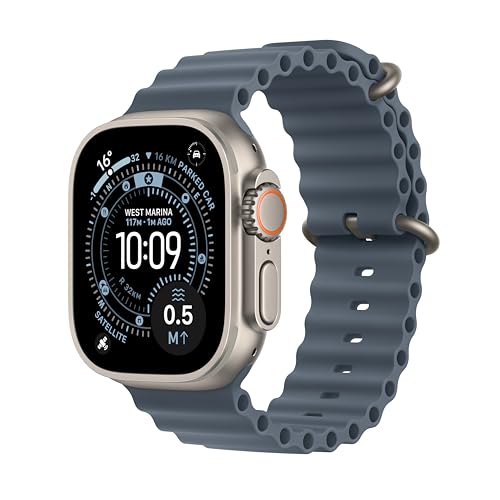
Apple Watch users can run with their watch perfectly well - Workout GPS mode is accurate, the heart rate sensor is reliable, and the Apple Fitness+ running workouts are well-produced. The limitation is battery life: at best 6–8 hours of GPS-active running, which means it'll handle a half marathon but not an all-day trail run. For casual runners doing three to four sessions a week, Apple Watch Series 11 or SE 3 is fine. For anyone training toward longer events or who wants the serious data depth of Garmin and COROS, a dedicated running watch is a better tool. See our best smartwatches in Australia 2026 guide for the full Apple Watch comparison.
Key Specs to Compare Before Buying
- GPS type: Dual-frequency (multi-band) GPS is more accurate in urban environments and under tree cover. Single-frequency GPS (Forerunner 165) is still good, just occasionally loses signal under thick canopy.
- Battery life: The number that matters is GPS battery - not smartwatch mode. COROS PACE 4 gets 41 hours GPS. Garmin Forerunner 265 gets 20 hours. For a marathon that won't be an issue - for a 50K trail race, it starts to matter.
- Display type: AMOLED (Garmin FR165, FR265) looks better but uses more battery. MIP (Polar Pacer Pro) is harder-wearing in direct sun and lasts longer.
- Wrist HR vs chest strap: All four watches include optical wrist heart rate monitoring. For the most accurate data during intervals, a chest strap (compatible with all four via ANT+/Bluetooth) is worth the extra outlay - particularly for HIIT and lactate-threshold workouts.
- Third-party platforms: All four watches sync with Strava. Garmin also syncs deeply with TrainingPeaks, Zwift, and MyFitnessPal. COROS and Polar have good but more limited third-party integration.
Our Pick for Australian Runners in 2026
For most people - the parkrun regular, the first-half-marathon trainer, the casual long-runner who wants proper pace data - the Garmin Forerunner 165 at $299–$329 AUD is the best GPS running watch in Australia right now: Garmin's coaching tools, an AMOLED screen, and a price that leaves money for shoes.
If battery life is what keeps nagging at you - ultra training, a week of camping, or simply hating chargers - the COROS PACE 4 at around $500 AUD is the one to buy. Forty-one hours of GPS, 33 grams on the wrist, and a screen that finally matches the Garmins.
And if you're training seriously for long-distance events and want the full Garmin ecosystem, the Garmin Forerunner 265 at ~$650–$700 is money well spent.
Want to keep exploring your gear options? Check out our picks for the best running earbuds in Australia, our full wearables category for watch rankings across every budget, and our best smartwatches Australia 2026 guide if you're still deciding between a running watch and a general smartwatch. All products are available on Amazon AU with current AUD pricing.
Top Picks - Check Latest Prices


See Our Top 7 Wearables for Australia
Hand-picked and ranked by our editors — with honest pros, cons, and Aussie pricing.
More Wearables Reading
Best Massage Gun Australia 2026: 7 Picks Ranked on the Specs That Matter
The best massage gun Australia 2026 picks, ranked by amplitude, stall force and value. Live AUD prices, Amazon AU links and what to avoid.
Best Sunrise Alarm Clock Australia 2026: Wake-Up Lights Ranked (AU Stock Only)
Best sunrise alarm clock Australia 2026 - wake-up lights ranked from Australian stock on Amazon AU, with why every Philips and Lumie is an import. AUD pricing.
Best Smartwatches Australia 2026: Ranked for Every Budget
The best smartwatches in Australia for 2026 - ranked and priced in AUD. Apple Watch, Samsung, Google Pixel Watch, and Garmin compared.
Weekly AU tech deals, in your inbox
We check prices on every product we cover daily. Once a week we send the biggest genuine price drops we spot - the ones worth your attention.
- One email a week, max
- No spam, ever
- Unsubscribe in one click