31 July 2026 · Home Cinema · AI-assisted · published by Jaco Olwagen · How we rank
Best Home Theatre Projector Australia 2026
The best home theatre projector picks in Australia for 2026, from a A$1,600 4K laser to ultra short throw. Real AUD prices and Amazon AU availability.
Best Home Theatre Projector Australia 2026: What Actually Belongs in an Aussie Loungeroom
There's a moment that gets everyone. You're sitting in a mate's rumpus room, the lights go down, and a 120-inch image swallows the whole wall. Suddenly the 65-inch telly at home feels like a laptop screen. That's the projector pitch in a nutshell, and in 2026 it's more affordable than it has ever been in Australia. Laser light engines that used to live in five-figure installs now sit under two grand, and the good ones run for 20,000-plus hours without a lamp change. This guide covers the best home theatre projector picks in Australia for 2026, priced in AUD and checked against live Amazon AU listings. If you're still torn between a big screen and a big projector, our best OLED TV guide for 2026 is worth a read first.
A quick word on honesty before we start: projector spec sheets are the wild west. Brightness gets quoted in ANSI lumens, ISO lumens, "LED lumens" and outright fiction, and a no-name unit claiming 15,000 lumens on Amazon is nowhere near as bright as a 2,200 ANSI Epson. Every product below is a real brand with an Australian warranty path, and every listing was checked as in stock and buyable at the time of writing. Projector listings on Amazon AU churn hard, so if something has gone quiet by the time you read this, that's why. If you want something you can chuck in a bag and take camping instead, that's a different job entirely, and our portable projector picks cover it properly.
Quick Picks - Top 3 Home Theatre Projectors
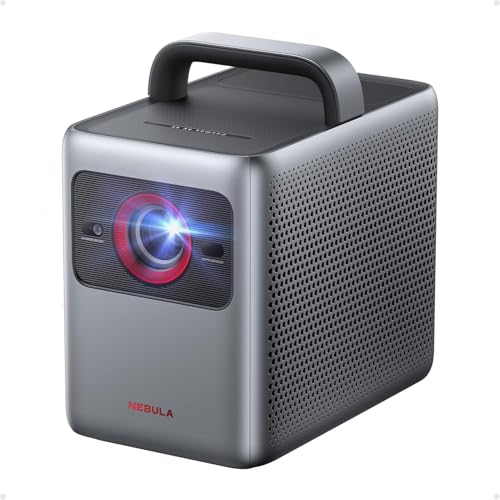 Nebula Cosmos Laser 4K SECheck Price
 | Projector | Best For | Price (AUD) |
|---|---|---|
| Nebula Cosmos Laser 4K SE | Best overall - 4K laser without the mortgage | ~A$1,800 |
| Dangbei DBOX02 | Best mid-range 4K laser | ~A$1,999 |
| Formovie Theater Premium | Best ultra short throw - no ceiling mount needed | ~A$4,199 |
Before You Buy: The Three Things That Actually Matter
Light control beats lumens. This is the one people get wrong. A 2,200 ANSI lumen projector in a room with blockout blinds looks better than a 3,500 lumen one in a west-facing loungeroom at 4pm. If you can't control the light, either budget for decent blinds or accept you'll be a night-time-only viewer. That's fine, plenty of Aussie households only fire up the big screen after the kids are down anyway.
Throw distance decides everything else. A standard long-throw projector needs roughly 3 to 3.5 metres of clear space behind the seating to hit 100 inches, which usually means a ceiling mount and cable runs through the plasterboard. An ultra short throw (UST) sits on a console 30 to 45cm from the wall and needs zero installation. If you're renting, or the idea of drilling into the ceiling makes you break out in a sweat, UST is worth the price premium.
Laser or LED, not lamp. Lamp projectors are cheaper up front and cost you A$200-plus every couple of thousand hours. In 2026 there's little reason to buy one for home use unless the entry price is the whole point. Laser and LED light engines are rated for 20,000 to 30,000 hours, which at three hours a night is roughly two decades.
1. Nebula Cosmos Laser 4K SE - Best Home Theatre Projector for Most Australians
The Nebula Cosmos Laser 4K SE is the pick for the majority of Aussie buyers, and the reason is unglamorous: it does most of what a three-grand projector does for a lot less money. It's a 4K laser unit with Google TV baked in, 1,800 ANSI lumens, Dolby Vision support, and auto keystone and autofocus that genuinely work, so you can shift it to a different room without a twenty-minute setup ritual. On Amazon AU it has been sitting around A$1,800 against a A$2,999.99 list price. It also carries more than 220 Australian ratings at 4.4 stars, which is a far bigger sample than most projectors in this bracket manage, and review volume matters more than usual in a category full of one-season no-name brands.
Google TV built in means Netflix, Stan, Kayo and Binge run natively, no dongle hanging off the back. That matters more than it sounds when the projector is ceiling mounted and every extra HDMI cable is another run through the roof cavity.
The good: proper 4K laser at a mid-range price, Dolby Vision, Google TV onboard, and the setup automation is the best of anything here under two grand.
The trade-off: 1,800 ANSI lumens is honest but not huge. In a bright loungeroom at midday you'll be squinting. It's a night-time and blinds-drawn projector, and the built-in speakers are fine for the footy but you'll want a soundbar for movies.
2. Dangbei DBOX02 - Best Mid-Range 4K Laser
 Dangbei DBOX02Check Price
 Dangbei isn't a household name in Australia yet, but the Dangbei DBOX02 has quietly become one of the better-reviewed 4K laser projectors on Amazon AU, holding 4.6 stars across 65 ratings at A$1,999. It runs 2,450 ISO lumens, which is a genuine step up in brightness over the Cosmos, and it ships with Google TV and an official Netflix licence.
That Netflix licensing point deserves a sentence of its own, because it catches people out. Plenty of Android and Google TV projectors can't run Netflix natively at full resolution due to licensing, and buyers only find out after unboxing, at which point they're casting from a phone or buying a Chromecast to sit behind the unit. Dangbei sorted it. Check this on any projector you're considering, whatever the brand.
The good: brighter than the Cosmos for A$200 more, licensed Netflix, Google TV, and the strongest star rating of any long-throw unit in this guide.
The trade-off: the brand has a much shorter track record in Australia than Epson or ViewSonic, so think about what a warranty claim looks like in three years. Sixty-five ratings is a decent sample but not a huge one.
3. ViewSonic LX700-4K - Best for Gaming and Brighter Rooms
 ViewSonic LX700-4KCheck Price
 Console and PC gamers have a different shopping list, and the ViewSonic LX700-4K is built for it: 240Hz refresh support and 4.2ms input lag, on a laser engine pushing 3,500 ANSI lumens. That brightness figure is the standout in this guide. It's the one projector here with a real shot at looking good in a room you haven't blacked out, which in a typical Australian loungeroom with windows on two walls is worth more than any other spec on the box. It sits around A$2,442 on Amazon AU with 4.0 stars across 114 ratings.
ViewSonic also has a long-established Australian distribution and service footprint, which is the quiet reason to pick it over a newer brand at similar money if you're nervous about support.
The good: by far the brightest option here at 3,500 ANSI lumens, genuine gaming credentials at 240Hz and 4.2ms, and a laser light source rated for the long haul.
The trade-off: 4.0 stars is the softest rating of the long-throw picks, and gaming-tuned projectors tend to prioritise brightness over the cinematic contrast a film buff would want. It's also the least interesting of the bunch for smart features.
4. Epson EH-TW850 - Best Budget Entry and the No-Rainbow Pick
 Epson EH-TW850Check Price
 Epson's 3LCD projectors do something single-chip DLP units can't: they put out the same brightness in colour as they do in white, and they sidestep the rainbow effect entirely. That's the flash of red-green-blue fringing at the edge of bright objects that a small percentage of people see on DLP projectors and then cannot un-see. If you've ever watched a DLP and felt vaguely seasick, this matters to you more than any other spec. The Epson EH-TW850 is the affordable way in at A$1,195, with 3,400 lumens from a 3-chip 3LCD engine, plus Miracast and AirPlay for casting straight off a phone or Mac.
Be clear on what you're giving up: this is Full HD 1080p, not 4K. On a 100-inch image at normal Australian loungeroom seating distances that's a visible step down from the 4K units above, though nowhere near as dramatic a gap as the spec sheet suggests. Contrast and brightness do more for perceived picture quality than resolution does, and at 3,400 lumens this is brighter than everything here except the ViewSonic.
The good: cheapest way into a real brand, no rainbow effect, genuinely bright, AirPlay built in, and Epson's service network is the best established in Australia.
The trade-off: 1080p in a 4K guide, and it's a lamp-based portable rather than a laser unit, so factor a lamp replacement in eventually.
5. Formovie Theater Premium - Best Ultra Short Throw
 Formovie Theater PremiumCheck Price
 Ultra short throw is the format that finally makes projectors work in a normal house. The Formovie Theater Premium sits about 42cm from the wall and throws up to a 150-inch image, so it lives on the same console your TV was on and nothing gets drilled into the ceiling. It runs ALPD 4.0 RGB tri-colour laser at 2,200 ISO lumens, Google TV with a proper Netflix licence, Dolby Vision, and Bowers & Wilkins tuned audio. On Amazon AU it's A$4,199 and holds a 4.8-star average, the highest rating of anything in this guide.
The good: no installation, genuinely cinematic tri-laser colour, licensed Netflix, and the built-in B&W audio is good enough that plenty of owners never bother with a soundbar.
The trade-off: A$4,199 buys a very good OLED instead, and UST projectors need an ambient light rejecting screen to look their best, which is another A$500-plus on top. UST is also unforgiving about wall flatness. A slightly bowed sheet of plasterboard shows up as soft corners.
6. Formovie Theater - The UST Step-Down
 Formovie TheaterCheck Price
 If the Premium is out of reach, the standard Formovie Theater is the same idea for roughly a grand less, at A$3,180 on Amazon AU. Same ultra short throw format, same tri-laser approach, same Bowers & Wilkins audio partnership, and it's the model that built Formovie's reputation among home cinema people in the first place. It carries 81 Amazon AU ratings, more than three times the Premium's sample, though at a lower 3.8-star average.
The good: UST convenience and tri-laser colour at a meaningfully lower price than the Premium, with a longer track record and more reviews behind it.
The trade-off: the 3.8-star average is worth reading through before you commit, and you still need a UST-specific screen to get the best out of it.
7. XGIMI Elfin Flip 4K - Best for Small Spaces and Renters
 XGIMI Elfin Flip 4KCheck Price
 Not everyone has a rumpus room. The XGIMI Elfin Flip 4K is a native 4K RGB triple-laser unit that folds down to something you can carry one-handed, at A$1,599 on Amazon AU. It does 1,600 ISO lumens with Google TV, Harman Kardon audio, autofocus, and a 0.98-1.3:1 optical zoom, so you can fine-tune image size without physically moving the projector. For an apartment, a bedroom, or a backyard screening in summer, it's the sensible amount of projector.
There's also a 1080p version, the XGIMI Elfin Flip Laser at A$1,399. Two hundred dollars for the jump to native 4K is the easy call, so most people should take the 4K unless the budget is genuinely fixed.
The good: native 4K triple laser at well under two grand, small enough to store in a cupboard, and optical zoom is rare at this price.
The trade-off: 1,600 ISO lumens means you're strictly a dark-room viewer, and both Elfin listings have small review samples so far.
Don't Forget the Screen
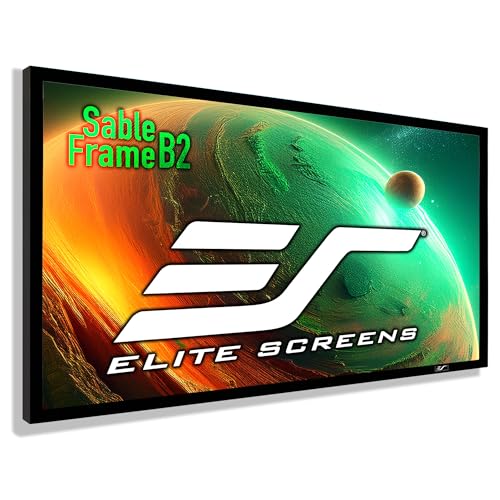 Elite Sable Frame B2 100-inchCheck Price
 Projecting onto a white wall works, and thousands of Australians do it. But a wall reflects light in every direction and has a slight texture that softens the image. A proper screen with a controlled gain lifts contrast, and it's the cheapest upgrade in the whole chain. The Elite Sable Frame B2 100-inch is the safe pick at A$599, with a CineWhite 1.1-gain surface, 4K and HDR ready, and more than 1,000 Amazon AU ratings at 4.4 stars, which is a bigger sample than any projector here.
If you've gone ultra short throw, you need a different type of screen entirely: an ambient light rejecting (ALR) or ceiling light rejecting (CLR) surface designed for the extreme upward projection angle. A standard matte white screen with a UST projector looks washed out and you'll wonder what went wrong. Budget A$500 to A$1,200 for a UST-specific screen and factor it into the purchase price from day one.
Projector vs TV in 2026: The Honest Answer
At A$1,800, a projector gives you 120 inches for the price of a mid-range 65-inch TV. That's the case for it, and it's a strong one. At A$4,000 the maths gets murkier, because a A$4,000 OLED will beat any projector on contrast, brightness and daytime viewing, and it needs no screen and no dark room.
So the split is roughly this. Buy a projector if screen size is the thing you actually care about, if you watch mostly at night, and if you can control the light in the room. Buy a TV if you watch a lot during the day, if the room has windows on two walls, or if the setup needs to be foolproof for everyone in the house. Plenty of Australian homes end up with both: a telly in the loungeroom for daily use and a projector in the garage or rumpus for movie nights and the grand final.
Frequently Asked Questions
How many lumens do I need for a home theatre projector in Australia?
In a fully darkened room, 1,500 to 2,000 ANSI lumens is plenty for a 100-inch image. With some ambient light, aim for 2,500 to 3,000. For a room you can't darken at all, you want 3,000-plus, and honestly you should consider a TV instead. Ignore "LED lumens" or "light source lumens" figures on cheap listings, they're inflated by a factor of two or three against ANSI.
Is 4K worth it on a projector, or is 1080p fine?
On a 100-inch-plus image at typical Australian loungeroom seating distances of 3 to 4 metres, 4K is visible but not dramatic. Contrast and colour accuracy make a bigger difference to how good the picture looks than resolution does. That's why the 1080p Epson EH-TW850 still earns a spot here at A$1,195. Above about A$1,500, though, there's no reason to buy new 1080p.
Do I need a separate sound system?
The Formovie and XGIMI units here have built-in audio that's usable on its own. Everything else, you'll want a soundbar or a proper AV setup. See our best soundbar guide for options that suit a projector setup, and remember that projectors need eARC or optical out to feed a soundbar, so check the ports before you buy.
Can I use a home theatre projector for gaming?
Yes, and it's spectacular on a 120-inch screen. Look for input lag under 20ms and, ideally, high refresh rate support. The ViewSonic LX700-4K leads the field here at 4.2ms and 240Hz. Avoid any projector that doesn't publish an input lag figure at all, because the ones that don't publish it are the ones with something to hide.
How long does a projector light source last?
Laser and LED engines are typically rated for 20,000 to 30,000 hours. At three hours a night that's 18 to 27 years, so in practice you'll replace the projector long before the light source dies. Lamp-based units are rated in the low thousands of hours and need a A$200-plus replacement, which is the main reason laser has taken over at this price point.
Our Pick
For most Australian buyers, the Nebula Cosmos Laser 4K SE at around A$1,800 is the best home theatre projector in Australia in 2026. It's 4K laser with Google TV and Dolby Vision at a price where a projector is clearly better value than an equivalent TV, and it has the review volume to back it up.
Want more brightness for the money? The Dangbei DBOX02 at A$1,999 is the better-rated unit. If you can't ceiling mount, or you're renting and drilling is out, spend up on the Formovie Theater Premium and put it on the TV console. Gamers should take the ViewSonic LX700-4K for its 240Hz and 4.2ms. And on a tight budget, the Epson EH-TW850 at A$1,195 gets you a real brand and a bright, rainbow-free picture.
Related Reading
A projector is one piece of the puzzle. Sort the audio with our best soundbar picks for 2026, and if you're weighing a big screen against a big projector, the best OLED TV guide lays out the case for the other side. Gamers should read our best TV for PS5 and Xbox comparison, and for something you can take camping, the portable projector guide covers the small end. For the rest of the room, browse our top speaker recommendations.
Weekly AU tech deals, in your inbox
We check prices on every product we cover daily. Once a week we send the biggest genuine price drops we spot - the ones worth your attention.
- One email a week, max
- No spam, ever
- Unsubscribe in one click