21 August 2026 · Smart Home · AI-assisted · published by Jaco Olwagen · How we rank
Best Portable Air Conditioner Australia 2026: 7 Picks From $254 on Amazon AU
The best portable air conditioner Australia 2026 has to offer: 7 verified Amazon AU picks from A$254, plus sizing, running costs and the windowless trap.
Best Portable Air Conditioner Australia 2026
Every year it happens the same way. First proper 34-degree day rolls through in October, the bedroom sits at 29 at 11pm, and half of Australia goes hunting for a portable air conditioner on the one weekend when every good unit is sold out. If you are reading this in September, you have beaten the rush by a few weeks, and that is worth actual money. The best portable air conditioner Australia 2026 has to offer is not the one with the biggest number on the box. It is the one sized properly for your room, with a hose you can actually get out a window, at a price that has not been jacked up because it is 38 degrees outside.
This guide covers seven units that are in stock on Amazon AU right now, from a $254 bedroom unit up to a $1,099 De'Longhi, with prices in AUD re-checked on 16 September 2026. It also covers the thing nobody selling these will tell you: a big chunk of the "portable air conditioners" on Amazon AU are not air conditioners at all. If you are kitting out a room properly, our dehumidifier guide and air purifier picks pair well with everything below.
Quick Picks - Best Portable Air Conditioner Australia 2026
| Unit | Best For | Price (AUD) |
|---|---|---|
| Hyundai 2.0kW (7,000 BTU) | Best budget - bedrooms and studies | ~A$254 |
| Hyundai 2.9kW (10,000 BTU) | Best value - main bedroom | ~A$334 |
| Shinco 3.5kW (12,000 BTU) | Best big room under $500 | ~A$446 |
| De'Longhi Pinguino PACEM82K | Best for light sleepers | ~A$654 |
| Midea 3.25kW Reverse Cycle | Best overall - cooling plus winter heating | ~A$700 |
Read this first: "windowless air conditioners" are not air conditioners
Search Amazon AU for a portable air conditioner and the cheapest results, the $149 and $189 ones with the glowing LED display and the 12-litre water tank, will be labelled "4-in-1 windowless portable air conditioner". They are evaporative coolers. Swamp coolers. A fan blowing across a wet pad.
There is no refrigerant, no compressor, no exhaust hose, and critically, no heat leaving the room. An evaporative cooler drops the air temperature by pushing moisture into it. Which works a treat in Mildura or Kalgoorlie in January when the humidity is down around 20 per cent. In Brisbane in February, or a muggy Sydney night in the high seventies humidity, all you get is a warm room that is now also damp. Genuinely worse than the fan you already own.
A real portable air conditioner has a compressor, a refrigerant (nearly all the good ones now run R290, which is a low-global-warming propane blend), and a fat 130mm hose that has to go out a window. If the listing has no hose in the photos, it is not going to cool your bedroom. That is the whole rule.
How to size a portable air conditioner for an Australian room
The rule of thumb the trade uses is roughly 1kW of cooling for every 8 to 10 square metres of floor. Round up, not down, if the room cops afternoon western sun, has raked or high ceilings, sits under an uninsulated tin roof, or has a big sliding door to the yard. Undersizing is the single most common mistake: a 2.0kW unit in a 30 square metre lounge will run flat out all evening, never hit the set temperature, and cost you more in power than the right unit would have.
| Room | Floor area | Cooling capacity | BTU |
|---|---|---|---|
| Study, small bedroom, nursery | Up to 20 m² | 2.0 - 2.1 kW | ~7,000 |
| Main bedroom, small lounge | 20 - 28 m² | 2.6 - 2.9 kW | 9,000 - 10,000 |
| Lounge, open-plan corner | 28 - 38 m² | 3.5 kW | ~12,000 |
| Big lounge, west-facing, high ceilings | 38 m²+ | 3.8 kW and up | 13,000+ |
One more thing worth knowing before you spend: portable units are always less efficient than a split system on the wall. You are paying for the ability to wheel it into another room and to take it with you when the lease ends. For renters that trade is a no-brainer. If you own the place and you are cooling the same room every summer for the next decade, a $1,400 installed split system will be cheaper to run and quieter than anything on this list.
The 7 best portable air conditioners on Amazon AU in 2026
1. Hyundai 2.0kW Portable Air Conditioner (7,000 BTU) - best budget
 Hyundai 2.0kW Portable Air Conditioner (7,000 BTU)Check Price
 Around A$254, and the cheapest unit here that is a genuine refrigerative air conditioner rather than a bucket of water with a fan behind it. Model number HY07KSPACPA, 2.0kW of cooling, smart controls, and a window kit in the box.
Two kilowatts is a bedroom or a home office, full stop. Put it in a lounge room and you will be disappointed. Put it beside a bed in a 3.5 by 4 metre room and it will take the edge off a 35-degree night for less than the price of a decent pair of earbuds.
The good: the lowest real entry price on Amazon AU for a proper compressor unit, app control at a price where you would normally get a knob and a rattle.
The trade-off: cooling only, no heating, and 2.0kW runs out of puff fast in anything bigger than a bedroom.
2. Hyundai 2.9kW Portable Air Conditioner (10,000 BTU) - best value
 Hyundai 2.9kW Portable Air Conditioner (10,000 BTU)Check Price
 Eighty dollars more than the 7,000 BTU model and it buys you nearly a full kilowatt of extra cooling, which is the difference between "bearable" and "actually cold" in a main bedroom. At about A$334 the HY10KSPACPA is the sweet spot on this list for most people.
2.9kW handles a room up to roughly 28 square metres. That is a typical main bedroom with an ensuite door open, or a small lounge in a unit. Smart controls again, so you can kick it on from the couch twenty minutes before bed and walk into a cool room.
The good: the best cooling-per-dollar on Amazon AU right now, and the right size for the room most people are actually trying to fix.
The trade-off: still cooling only. If you want the unit earning its keep in July as well, skip to the reverse cycle picks.
3. De'Longhi Pinguino Compact ES72 CLASSIC - best compact
 De'Longhi Pinguino Compact ES72 CLASSICCheck Price
 About A$570 for 8,300 BTU (2.1kW), rated for rooms up to 60 cubic metres, with a 24-hour timer, Class A energy rating and R290 refrigerant. On paper you are paying more than $300 over the entry Hyundai for a tenth of a kilowatt of extra cooling, and that is a fair reading. What you get instead is De'Longhi's build, their Pinguino cabinet design that is meaningfully smaller than most 2kW units, and a company that has been making these in volume since before portable air con was a category in Australia.
It is the pick for a small apartment bedroom where the unit has to live in the corner year-round and you would rather it did not look like a photocopier.
The good: compact footprint, Class A efficiency, De'Longhi parts and service network in Australia.
The trade-off: you pay a brand premium for 2.1kW, and there is no heating mode.
4. Shinco 12,000 BTU Portable Air Conditioner (3.5kW) - best big room under $500
 Shinco 12,000 BTU Portable Air Conditioner (3.5kW)Check Price
 About A$446 for 3.5kW of cooling, rated by Shinco for rooms up to around 35 square metres, with R290 refrigerant, a 24-hour timer, a remote, and the exhaust hose and window kit in the box. This slot used to hold Hyundai's 3.8kW reverse cycle unit, which has sold out on Amazon AU. The Shinco is now the cheapest lounge-room-sized compressor unit on Amazon AU with a real review history behind it: a four-star average across more than 50 reviews.
3.5kW is genuine lounge room capacity, the sort of thing that will hold a 30 square metre living area at a sane temperature through a February afternoon. Shinco is not a household name the way De'Longhi is, but the same maker's 9,000 BTU unit further down this page is one of the best-reviewed portable air conditioners on Amazon AU, and this is its bigger sibling.
The good: the most cooling capacity per dollar here, R290, and a long Amazon AU review record.
The trade-off: cooling only with no app, and big units are heavy units. 12,000 BTU of compressor is not something you casually carry up a flight of stairs, and it will be louder than the 2kW units at full noise.
5. Midea 3.25kW Portable Air Conditioner - best overall
 Midea 3.25kW Portable Air ConditionerCheck Price
 Around A$700 for 3.25kW cooling and 2.81kW heating, sold by Midea's own Australian arm. Midea is the largest air conditioner manufacturer on the planet and builds units for several brands you would recognise, so parts and service in Australia are not a worry. It takes the top spot now that the Bonaire 3.5kW that used to hold it has sold out on Amazon AU, along with the rest of Bonaire's portable range.
Reverse cycle is why. A portable heater is a resistive element: one kilowatt in, one kilowatt of heat out. A reverse cycle unit is a heat pump, so it moves several times more heat than the electricity it consumes. Buying reverse cycle turns a three-month appliance into a year-round one, which changes the maths on the whole purchase, and none of the cheaper units on this list can do it.
The good: serious manufacturing pedigree, strong heating output, a local seller to deal with if something goes wrong.
The trade-off: A$700 is real money, and the Amazon AU listing is thin on detail with no reviews yet, so check Midea's own spec sheet for noise and hose length before you buy.
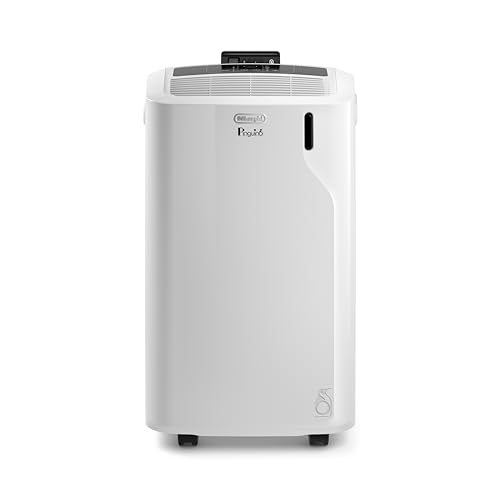
6. De'Longhi Pinguino PACEM82K - best for light sleepers
 De'Longhi Pinguino PACEM82KCheck Price
 About A$654 for 9,400 BTU (2.4kW), rated to 80 cubic metres, Class A, R290, 24-hour timer and remote. This is De'Longhi's Silent line, and quiet is the entire reason to spend the money.
Here is the honest version of the noise story, because a lot of sites get carried away with it. Every portable air conditioner puts the compressor in the room with you, which is exactly what a split system avoids by bolting it to the outside wall. Nothing on this list is silent. De'Longhi quotes figures in the mid-60s dB for its bigger models at full tilt. What the Silent range does is get the night and low fan modes down far enough that the unit becomes a background hum instead of a thing that wakes you at 2am when the compressor kicks in. If you sleep light, that gap is worth paying for.
The good: the quietest realistic option on this list, strong dehumidifying, proper De'Longhi build.
The trade-off: 2.4kW for $654 is not value on a spec sheet. You are buying the acoustics, there is no heating mode, and its Amazon AU rating is mixed across only a handful of reviews.
7. De'Longhi Pinguino Care4Me PAC EL110ERFWIFI - best for humid climates
 De'Longhi Pinguino Care4Me PAC EL110ERFWIFICheck Price
 At A$1,099 it is a splurge, and it is the only unit here we would call clever. 11,000 BTU (2.9kW), R290, WiFi and voice control, and EcoRealFeel, which reads both temperature and humidity and targets how the room feels rather than what the thermostat says. De'Longhi quote 64dB. On a sticky east-coast night, humidity is what makes a 26-degree room feel unbearable, and a unit that chases the moisture rather than just the number is doing the right work. Hard to justify against the Midea on pure value, easy to justify if you live somewhere humid and you want the best of it.
Cheaper units that are still real air conditioners
 Shinco 9,000 BTU Portable Air ConditionerCheck Price
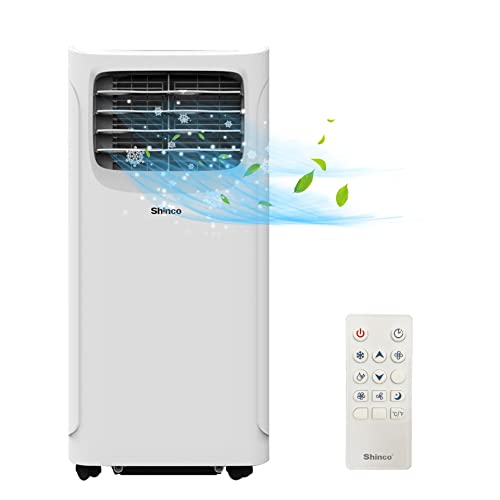
 If the picks above are more than you want to spend, these two are genuine compressor units with exhaust hoses, in stock on Amazon AU, and priced under $400. (The Advwin and Costway 9,000 BTU units that used to sit here have sold out, and the Goldair 7,000 BTU is down to its last couple of units.) Neither will match the Midea or the De'Longhi for refinement, but all of them will move heat out of your room, which is more than the $149 windowless things can say.
| Unit | Capacity | Price (AUD) |
|---|---|---|
| Shinco 9,000 BTU Portable Air Conditioner | 9,000 BTU / 2.6 kW | ~A$310 |
| Advwin 12,000 BTU 3-in-1 | 12,000 BTU | ~A$330 |
When an evaporative cooler actually makes sense
 Midea Portable Air CoolerCheck Price
 Everything above assumes you want heat gone. If you live somewhere properly dry, Adelaide, Perth in a heatwave, the Riverina, most of inland WA and SA, evaporative cooling works and it works cheap. A cooler like the Midea Portable Air Cooler runs at about A$179 and draws a fraction of the power a compressor unit does, because all it is doing is spinning a fan across a wet filter.
The rule is simple. Dry air, evaporative cooling is efficient and cheap. Humid air, it does nothing useful and adds damp to a room that already has too much of it. If you are anywhere on the east coast north of about Wollongong, skip it and buy a compressor unit, or grab a dehumidifier instead and be honest with yourself about what the problem actually is.
Single hose vs dual hose, and why your unit feels weak
Almost every portable air conditioner sold in Australia, including every unit on this page, is a single-hose design. One fat hose out the window carrying hot exhaust away.
The catch that nobody puts on the box: the air going out that hose came from inside your room. So the room ends up at slightly negative pressure, and it makes up the difference by pulling hot outside air in through every gap around your doors, windows and floorboards. That is a real efficiency loss, and it is why a properly sized portable unit still feels weaker than a split system with the same kilowatt rating on the label.
You cannot beat the physics with a single-hose unit, but you can blunt it. Keep the door to the room shut. Seal the window kit properly rather than letting it flap. Keep the exhaust hose as short and straight as it will go, because every bend and every metre of coiled hose is warm air radiating back into the room you are trying to cool. And insulate the hose if you are handy, a bit of foam lagging over it makes a difference you can feel.
What a portable air conditioner costs to run in Australia
Rough maths, because your tariff and your room will move the number. A portable unit draws in the ballpark of 1 to 1.3kW of electricity to produce 2.6 to 3.5kW of cooling. With residential electricity sitting around 30 to 40 cents per kilowatt hour across most of the country in 2026, that lands at roughly 30 to 50 cents an hour while the compressor is actually running.
The good news is that it is not running the whole time. Once the room hits temperature the compressor cycles off and only the fan keeps going, which is a fraction of the draw. Run it for six hours overnight and you are looking at maybe a dollar fifty to three dollars, not the ten dollars people fear. Two things cut it further: set the thermostat to 24 rather than 18, because every degree lower is measurably more work for the compressor, and use the 24-hour timer so it is not still going at 6am when the room has been cold for hours.
Window kits and the Australian window problem
Portable air conditioners are designed around a bottom-opening sash window, which is what most of the world has. Plenty of Australian housing does not. If you have got horizontal sliding windows, the standard kit still works, you just mount the panel vertically in the slide and it looks a bit odd. If you have got awning or casement windows, the ones that crank outward, the supplied kit will not seal and you will need to cut a panel of acrylic or corflute to fit the opening and cut a 130mm hole in it. Half an hour with a jigsaw, and worth doing properly because an unsealed window undoes a lot of the cooling you just paid for.
Renting? Every one of these units is a no-holes install. That is the entire reason the category exists. Keep the box, keep the kit, and it comes with you to the next place.
Our pick
For most Australian homes the Midea 3.25kW at about A$700 is the best portable air conditioner you can buy on Amazon AU in 2026. It has the capacity for a real living room, it heats as well as cools so it is not sitting in the shed for nine months of the year, and it comes from the biggest air conditioner maker there is, sold through its own Australian arm. If you only need cooling for a big room, the Shinco 3.5kW at about A$446 does that job for a lot less.
If the room is a bedroom rather than a lounge, save the money and take the Hyundai 2.9kW at A$334. If you are the sort who wakes at every compressor cycle, spend up on the De'Longhi PACEM82K. And if the budget will not stretch past $300, the Hyundai 2.0kW is a legitimate air conditioner rather than a fan with delusions, which is the only line that really matters at that end of the market.
Buy it in September. Every year the prices on these firm up the moment the first heatwave warning goes out, and the good models are the first to go out of stock.
Sorting the rest of the house out while you are at it? Our best air purifier picks are the move for spring hay fever and bushfire smoke, the best dehumidifier guide covers damp and mould, and when winter swings back around our best electric heater picks will save you running the ducted system. For the rest of the connected-home gear, start with our smart home starter kit guide or head to the robot vacuum category for the full ranked list.
Top Picks - Check Latest Prices


See Our Top 7 RoboVacs for Australia
Hand-picked and ranked by our editors — with honest pros, cons, and Aussie pricing.
More Smart Home Reading
Eight of the 13 robot vacuums we track have never sold at their crossed-out price
85 daily Amazon AU snapshots since 16 June: on 8 of 13 robot vacuums the crossed-out price was never a real price. Here are the floors that matter.
Best Pet Camera Australia 2026: Dog and Cat Cams Ranked
The best pet camera Australia 2026 has: treat-tossing, 4K and A$25 budget picks ranked, with Amazon AU prices in AUD and no-subscription options.
Best Baby Monitor Australia 2026: Wi-Fi vs No-Wi-Fi, Ranked
The best baby monitor Australia 2026: Wi-Fi and no-Wi-Fi models ranked, with Amazon AU prices in AUD, range, battery life and privacy notes.
Weekly AU tech deals, in your inbox
We check prices on every product we cover daily. Once a week we send the biggest genuine price drops we spot - the ones worth your attention.
- One email a week, max
- No spam, ever
- Unsubscribe in one click