22 April 2026 · Smart Home · AI-assisted · published by Jaco Olwagen · How we rank
Best Smart Speaker Australia 2026: Amazon Echo vs Google Nest
The best smart speakers in Australia for 2026 - Amazon Echo vs Google Nest compared with AUD prices, Alexa vs Google Assistant tips for Aussies.
Best Smart Speaker Australia 2026: Amazon Echo or Google Nest?
Walk through any JB Hi-Fi and there's a whole wall of smart speakers at wildly different prices. Most of them do the same stuff at a glance - answer questions, play music, set timers while your hands are covered in garlic. But pick the wrong ecosystem and you'll spend the next few years fighting with your own kitchen appliances. For more speaker picks to complement your smart home, check out our top Bluetooth and smart speakers for Australians.
This guide covers the five best smart speakers available in Australia right now, from the ultra-cheap Amazon Echo Pop to the Echo Studio for people who actually care about how their music sounds. All prices are in AUD, all products available on Amazon AU, and we've broken down the Alexa-versus-Google question for Australians specifically - because the answer here is slightly different to the US advice you'll find on overseas sites.
Quick Picks - Best Smart Speakers Australia 2026
| Speaker | Best For | Price (AUD) |
|---|---|---|
| Amazon Echo Pop | Best entry-level / bedroom pick | ~A$49–79 |
| Amazon Echo Dot (5th Gen) | Best all-round budget speaker | ~A$79–89 |
| Amazon Echo (4th Gen) | Best full-size Alexa speaker with smart home hub | ~A$139–149 |
| Amazon Echo Studio (newest gen) | Best audio quality | ~A$299–349 |
| Google Nest Mini (2nd Gen) | Best for Android / Google users | ~A$49–59 |
Amazon Echo Pop - Best Entry-Level Smart Speaker
 Amazon Echo PopCheck Price
 The Echo Pop is Amazon's smallest and cheapest smart speaker, and at its sale price - which Amazon drops it to fairly regularly, sometimes to A$29 - it's basically a throwaway purchase that turns out to be quite good. Half-sphere design, compact enough for a bedside table or bathroom shelf, and it sounds noticeably better than you'd expect something this small to sound.
The core Alexa features are all there: stream music from Spotify, Amazon Music, or Apple Music via Bluetooth; ask for weather forecasts; set cooking timers; control compatible smart home devices. If you've got a couple of smart globes or a smart plug already, the Echo Pop will pick them up without fuss.
The catch is that the Echo Pop doesn't include a Zigbee hub, which means it won't directly control smart home devices that require a hub - you'd need to upgrade to the Echo (4th Gen) or use a separate hub for that. But for most people who just want a voice-controlled speaker in a room that doesn't have one yet, it's the right price for a low-risk experiment.
Available at Amazon AU, JB Hi-Fi, and Officeworks.
The good: Tiny footprint, surprisingly decent sound for the size, genuinely cheap especially on sale, all the core Alexa skills.
The trade-off: No Zigbee smart home hub. Mono sound only - not great for music quality if that matters to you.
Amazon Echo Dot (5th Gen) - Most Popular Smart Speaker in Australia
 Amazon Echo Dot (5th Gen)Check Price
 The Echo Dot is the one most Aussies buy first, and for good reason. It's small enough to live on any surface, the sound quality is a meaningful step up from the Echo Pop thanks to a larger driver and a temperature and humidity sensor built in for the 2022 fifth-gen model, and it connects to Eero mesh Wi-Fi if you've got Amazon's router system running.
Sound-wise, the 5th Gen Echo Dot is good for podcasts, radio, and background music - think ABC Radio National while you're cooking, or triple j while you're working from home. If you're expecting audiophile-quality sound from a A$79 hockey-puck-shaped speaker, recalibrate. But for voice control and casual listening, it earns its spot on the kitchen bench.
There's also a version with a built-in LED clock display on the front face - the Echo Dot with Clock - which runs roughly A$10 more and is dead handy for a bedside table where you want to see the time without squinting at your phone.
The 5th Gen model added a temperature and humidity sensor, which feeds data into Alexa routines - so you can set automations like turning on a fan when the room hits 28 degrees. Useful in an Australian summer in a way it genuinely wouldn't be in cooler climates.
AUD Street Price: ~A$79–89 for the standard model; ~A$89–99 for the with-clock version. Both available at Amazon AU, JB Hi-Fi, Harvey Norman, and Officeworks.
The good: Best combination of price and capability for most buyers, temperature/humidity sensor, Eero Wi-Fi support, compact design.
The trade-off: No Zigbee smart home hub (that's the full Echo). Sound doesn't fill a large room well without pairing to another speaker.
Amazon Echo (4th Gen) - Best All-Rounder with Smart Home Hub
 Amazon Echo (4th Gen)Check Price
 The full-size Echo is the one you buy when you're serious about building an Alexa smart home, not just dipping a toe in. The spherical 4th Gen model has a built-in Zigbee smart home hub, which means it can directly communicate with Zigbee-protocol devices - the same protocol used by Philips Hue bulbs, IKEA Tradfri lights, and a growing range of smart home gear available at JB Hi-Fi and Harvey Norman.
The sound quality also takes a proper step up from the Dot. The 4th Gen Echo has a 3-inch woofer and two tweeters, producing genuine stereo separation and enough volume to fill a kitchen or living room. It's not a substitute for a dedicated Bluetooth speaker, but it's a legitimate home speaker in its own right - not just a voice assistant with a speaker bolted on.
Pairing two Echo (4th Gen) speakers in stereo is a well-regarded setup for living rooms and home offices. Amazon's app makes the stereo pairing straightforward. You can also use one Echo as a left channel and one as a right channel in a surround sound setup paired with a compatible Amazon Fire TV device - see our best streaming device guide if you're setting up a proper lounge room.
At ~A$139–149, it's noticeably more expensive than the Dot. But if you want to control smart lights, locks, and sensors directly - without a separate hub - the 4th Gen Echo is the minimum you need.
The good: Built-in Zigbee hub, much better sound than the Dot, stereo pairing supported, looks solid on a shelf.
The trade-off: Costs nearly double the Echo Dot. If you don't have or plan to get Zigbee smart home devices, you're paying for a feature you won't use.
Amazon Echo Studio (newest gen) - Best Audio Quality
 Amazon Echo Studio (newest gen)Check Price
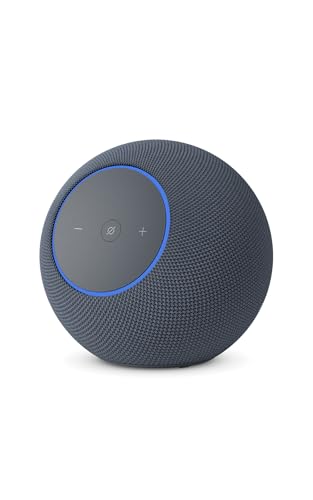
 The Echo Studio is what happens when Amazon decides to take audio seriously. The newest generation is 40% smaller than the original but still packs five speakers - one upward-firing tweeter, one side-firing midrange, and three downward-firing woofers - to produce genuine spatial audio that bounces off your walls and ceiling rather than just projecting forward like a conventional speaker.
It supports Dolby Atmos and Sony 360 Reality Audio, and if you're streaming through Amazon Music Unlimited at its HD tier, you'll actually hear the difference. Spatial audio on a track like something from Tame Impala or a well-mixed live recording sounds noticeably wider and more three-dimensional than it does through a standard Bluetooth speaker at the same price.
At ~A$299–349, it's a proper commitment. For context, a Sonos One sits in a similar price bracket and sounds excellent - but doesn't have Alexa voice control built in to the same degree, and doesn't integrate as tightly into an all-Alexa smart home. If you're already invested in the Amazon ecosystem and want the best-sounding speaker in it, the Echo Studio newest gen is the call. For anyone who wants great sound without the smart home angle, check out our best Bluetooth speakers guide for dedicated audio options.
The good: Spatial audio is genuinely impressive, Dolby Atmos support, built-in smart home hub, compact redesign in the newest gen, Amazon Music HD compatibility.
The trade-off: Expensive. The audio benefit is real but only obvious with high-quality streaming sources. Overkill for background music use cases.
Google Nest Mini (2nd Gen) - Best for Android and Google Users
 Google Nest Mini (2nd Gen)Check Price
 If you're an Android person, or you use Google services heavily - Google Calendar, Google Photos, Gmail, the lot - the Nest Mini makes more sense than an Echo. Google Assistant on the Nest Mini integrates directly with your Google account, which means it can read your calendar events out loud, remind you of upcoming appointments, and pull information from your Gmail more naturally than Alexa can with a third-party Google account.
For Australian users, Google Assistant also handles local queries well - search for nearby cafes, get live AFL or NRL scores, ask about public transport. The voice recognition has consistently been rated highly, and for question-answering tasks that draw on Google Search, it has an edge over Alexa.
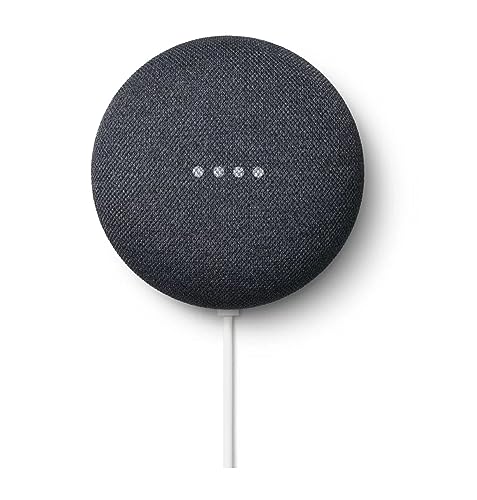
The Nest Mini is small - hockey puck-sized - and the sound is on par with the Echo Pop at a similar price point. It's wall-mountable out of the box with a slot built into the base, which is handy for a kitchen power point where bench space is scarce. Google promises regular software updates and the AU/NZ model comes with the appropriate Australian power adapter and is warranty-compliant for Australian consumer law.
One important note for Australians: Google discontinued the Nest Audio full-size speaker in some markets, and availability has been patchy. The Nest Mini remains widely stocked and is the safer choice if you want something you can buy and return easily under Australian Consumer Law.
AUD Street Price: ~A$49–59 on Amazon AU; also at JB Hi-Fi and The Good Guys.
The good: Google Assistant is excellent for search and calendar integration, great for Android phone users, wall-mountable, compact design.
The trade-off: Mono sound only. Less capable smart home hub integration compared to the Echo (4th Gen) in a mixed-brand smart home setup.
Alexa vs Google Assistant: What Makes Sense in Australia?
The honest answer is that both voice assistants work well for everyday Aussie use - set a timer, play Spotify, turn off the lights. The decision really comes down to your existing ecosystem.
Choose Alexa (Amazon Echo) if:
You have or plan to get Amazon smart home gear like Ring cameras, Blink cameras, smart plugs, or Zigbee lights. You have Amazon Prime (which bundles Amazon Music). You want the widest range of third-party smart home device compatibility. You're building a multi-room audio setup with multiple Echo devices.
Choose Google Assistant (Nest Mini) if:
You use an Android phone and rely on Google services daily. You want better answers to general knowledge and local search queries. You already use Google Home for other smart devices like Nest Thermostats or Nest cameras.
What about Apple? The HomePod mini is available through Apple Australia and JB Hi-Fi and sounds brilliant for its size. But it's locked to the Apple ecosystem and doesn't integrate with non-Apple smart home devices as widely. If you have an iPhone and a house full of HomeKit devices, it's worth a look - but it's not on Amazon AU, so it's outside the scope of this guide.
Do You Actually Need a Smart Speaker in 2026?
The case for a smart speaker in an Australian home is honestly stronger now than it was five years ago. Smart plugs and smart switches have come down in price significantly - you can pick up a TP-Link Kasa smart plug for A$25–35 and have voice-controlled power switches throughout your house within an afternoon. Smart lights from Philips Hue and IKEA are widely stocked. A A$79 Echo Dot or Nest Mini turns all of that into a hands-free setup.
If you've been on the fence, the Echo Pop at sale price - sometimes under A$30 - is a genuinely low-risk way to find out if voice control suits your home.
Which Smart Speaker Should You Buy in Australia?
For most Australians in 2026, the Amazon Echo Dot (5th Gen) at ~A$79–89 is the obvious starting point. It covers all the core Alexa skills, sounds decent enough for everyday use, and Amazon discounts it reliably throughout the year - especially around Prime Day and Black Friday.
If you're serious about a smart home hub, step up to the Echo (4th Gen) for the built-in Zigbee hub and better room-filling sound. Android loyalists will be happier with the Google Nest Mini. And if you want the best audio quality in the Echo lineup without spending Sonos money, the Echo Studio (newest gen) is a serious speaker at a reasonable price for what it does.
If this helped you sort your smart home setup, check out our other guides: the best streaming devices for Australians pair brilliantly with a smart speaker setup, and our best Bluetooth speakers are worth a look if portability matters more than voice control. For the full picture on home audio, browse our top speaker picks across all categories.
Top Picks - Check Latest Prices


See Our Top 7 RoboVacs for Australia
Hand-picked and ranked by our editors — with honest pros, cons, and Aussie pricing.
More Smart Home Reading
Eight of the 13 robot vacuums we track have never sold at their crossed-out price
85 daily Amazon AU snapshots since 16 June: on 8 of 13 robot vacuums the crossed-out price was never a real price. Here are the floors that matter.
Best Pet Camera Australia 2026: Dog and Cat Cams Ranked
The best pet camera Australia 2026 has: treat-tossing, 4K and A$25 budget picks ranked, with Amazon AU prices in AUD and no-subscription options.
Best Baby Monitor Australia 2026: Wi-Fi vs No-Wi-Fi, Ranked
The best baby monitor Australia 2026: Wi-Fi and no-Wi-Fi models ranked, with Amazon AU prices in AUD, range, battery life and privacy notes.
Weekly AU tech deals, in your inbox
We check prices on every product we cover daily. Once a week we send the biggest genuine price drops we spot - the ones worth your attention.
- One email a week, max
- No spam, ever
- Unsubscribe in one click