27 May 2026 · Wearables · top7.au editorial team
Best Fitness Tracker for Tax Claim Australia 2026 - 7 EOFY Picks for PTs and Health Pros
Best fitness tracker for tax claim Australia 2026. Seven Amazon AU picks for PTs, sports coaches and allied health pros to consider before 30 June.
Best Fitness Tracker for Tax Claim Australia 2026
Let's get the awkward bit out of the way first. For the average office worker scrolling Amazon AU for a fitness tracker in late June, the watch on your wrist is a private item, not a deductible work expense. The ATO has been pretty consistent on that. Where the conversation changes is if measuring your own or someone else's physiology is genuinely part of how you earn a living - personal trainers, group fitness instructors, sports coaches, allied health practitioners, occupational therapists running movement programs, and so on. For that crowd, a fitness tracker can be a real piece of professional equipment, and the EOFY conversation with your tax agent is worth having. This is a guide for them. For our broader catalogue, the wearables category page on top7.au has the rest of the lineup, and our 2026 best smartwatch guide covers the picks that aren't tax-focused.
The seven fitness trackers below are all available on Amazon AU right now, all sit comfortably under the A$20,000 instant asset write-off ceiling for eligible small businesses, and most sit under the A$300 single-year deduction threshold for salaried employees with a defensible work-use case. Prices below are typical Amazon AU sticker prices in May 2026 - look out for the EOFY discount cycle in the back half of June. Every product link is an Amazon AU affiliate link tagged top7-22, which means we get a small commission if you buy. No extra cost to you.
Quick Picks - Best Fitness Trackers for Tax Claim EOFY 2026
| Product | Best For | Price (AUD) |
|---|---|---|
| Xiaomi Smart Band 9 | Cheapest defensible pick | ~A$59 |
| Samsung Galaxy Fit3 | Best budget Android pairing | ~A$129 |
| Fitbit Charge 6 | Best all-rounder for PTs | ~A$199 |
| Garmin Forerunner 165 | Best for running coaches | ~A$449 |
What You Can Claim and How (Be Honest With This)
The 2025-26 financial year ends 30 June 2026. Buy a fitness tracker before that date, and depending on your circumstances it may or may not become a deductible expense against the 2025-26 return you'll lodge from July onwards. Three things to be straight about.
One. The general rule from the ATO is that fitness trackers worn for personal health, general wellness, or to count your daily steps are private expenses. The fact that you wear one to work doesn't change that, in the same way wearing a Casio to work doesn't make a Casio claimable. For most readers, this is the end of the conversation.
Two. The exception is where the tracker is required to earn your income, or where there's a clear and direct connection between the device and the work you do. The clearest case is for personal trainers and group fitness instructors who use heart rate and recovery data to design client programs, sports coaches monitoring athletes, allied health professionals running rehab or movement programs, and exercise physiologists. There's also a narrow case for sportspeople whose earnings depend on their own physical performance. In these contexts, the work-use portion of the device may qualify as a deductible expense - your tax agent will help you work out the percentage.
Three. The instant asset write-off for eligible small businesses with turnover under A$10 million currently sits at A$20,000 per asset for 2025-26. Every tracker on this list is well under that. For salaried employees with a defensible work-use case, items costing A$300 or less can often be claimed in full in the year of purchase, and items above that get depreciated over their effective life (a wearable's effective life is generally three years for ATO purposes, though check with your agent).
Honesty rule: if you can't sketch a paragraph explaining what specifically about your job requires this device, the deduction probably isn't going to stand up. The ATO has gotten sharper on private-use claims. Talk to a registered tax agent about your specific situation, or check ato.gov.au, before claiming.
Xiaomi Smart Band 9 - Cheapest Defensible Pick
 Xiaomi Smart Band 9Check Price
 Around A$59 on Amazon AU for the standard Black with the 1.62 inch AMOLED. Xiaomi has spent close to a decade making the Mi Band the cheapest fitness tracker that doesn't feel cheap, and the Band 9 is the cleanest version of that idea yet. Up to 21 days of battery life on a charge, 150 plus sports modes including basics like running, cycling, swimming, HIIT, and yoga, continuous heart rate, blood oxygen, sleep stages, and stress tracking, plus 5 ATM water resistance so the pool sessions are in scope.
The catch is the data pipeline. Xiaomi's Mi Fitness app gets the basics right but doesn't talk to Garmin Connect, Polar Flow, or TrainingPeaks the way the bigger ecosystems do. For a PT who wants to wear something light during sessions and use the data to log their own load alongside client work, this is the cheapest entry point into a fitness tracker that does a real job. Sitting at A$59, it's the lowest-friction pick on this list if your accountant is willing to support the claim.
The good: Genuinely cheap, three weeks of battery means you forget to charge it and that's fine, AMOLED is bright enough for outdoor coaching sessions, 5 ATM rated.
The trade-off: No GPS without a paired phone, so route data needs your phone in your pocket. Mi Fitness app is closed to most third-party platforms. The strap material isn't the most durable - figure on replacing it after a year of sweat.
Samsung Galaxy Fit3 - Best Budget Android Pairing
 Samsung Galaxy Fit3Check Price
 Around A$129 on Amazon AU for the AU Version in Pink Gold (Gray and Silver are similar money). The Fit3 is what Samsung built for the buyer who wants Galaxy Watch features at Mi Band money. 1.6 inch AMOLED, aluminium body, 13 days of battery life, 5 ATM and IP68, plus access to over 100 trackable exercises and Samsung Health's automatic workout detection.
This is the obvious pick for a fitness instructor or sports coach who already runs a Samsung phone, because Samsung Health is where the data ends up and the integration is clean. The Galaxy ecosystem also has the practical advantage of working with most Australian clinic and gym management software through the Health platform's export tools. At A$129 it sits comfortably inside the salaried-employee single-year deduction threshold if your work-use case is defensible.
The good: Light enough to forget you're wearing it during a client session, aluminium body holds up to gym scrapes, AMOLED is properly bright, Samsung Health export works with most clinic platforms.
The trade-off: Best on Samsung phones - on a Pixel or iPhone it works but loses the polish. No built-in GPS. The button placement on the side is easy to press accidentally during burpees.
Fitbit Charge 6 - Best All-Rounder for PTs
 Fitbit Charge 6Check Price
 Around A$199 on Amazon AU for the Obsidian/Black with a 6 month Fitbit Premium membership in the box. Charge 6 is the fitness tracker most Australian PTs end up on, and it earns the spot. Built-in GPS so route data doesn't depend on a phone in the pocket, 40 plus exercise modes with auto-detection, heart rate broadcasting to compatible gym equipment via Bluetooth (genuinely useful when you're spot-checking a client on a rowing machine), seven days of battery, ECG, Google Maps and Google Wallet on the wrist.
The reason this is the all-rounder pick for the PT crowd: Fitbit Premium is where the data analysis happens, and a 12 month Premium subscription is itself a separately deductible expense for an eligible business setup. The Charge 6 makes a coherent ecosystem rather than just a wrist device. At A$199 the headline price is inside the salaried-employee single-year threshold, and Premium is bundled in for the first six months.
The good: Built-in GPS doesn't need your phone, heart rate broadcasts to gym equipment, ECG on a fitness band at this price is unusual, Premium subscription bundled for half a year.
The trade-off: Premium needs an active subscription after six months for the deeper analytics. Charge 6 is locked into Google's ecosystem for some features now (Wallet, Maps), and you need a Google account. The button is haptic rather than physical, which doesn't always register through sweat.
Garmin Vivosmart 5 - Best Discreet Garmin
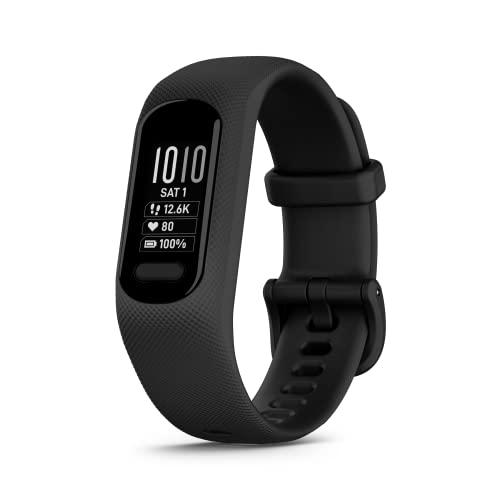 Garmin Vivosmart 5Check Price
 Around A$229 on Amazon AU for the Black in S/M (Mint and White are the same money). The Vivosmart 5 is Garmin's stripped back fitness tracker for buyers who want the Garmin Connect data platform but don't want a watch-sized device on their wrist. The screen is a small OLED strip, the body is light enough that you forget it's there, 14 sports modes covered, all-day stress tracking, Pulse Ox, Body Battery, women's health tracking, and around seven days of battery in smartwatch mode.
For an allied health practitioner who needs the band tucked discreetly under a long sleeve during client work, or for an occupational therapist who doesn't want a screen lighting up during a session, the Vivosmart 5 is the right size and the data goes into Garmin Connect which exports cleanly into most coaching and clinical software. At A$229 it's under the A$300 single-year deduction threshold for salaried claimers.
The good: Small enough to forget about, Garmin Connect is the most flexible data platform on this list, Body Battery is genuinely useful for tracking client recovery, week-long battery.
The trade-off: Tiny screen means tiny notifications. No built-in GPS (connected GPS via phone only). The proprietary charger is an extra cable you have to keep track of. Vivosmart 4 to 5 wasn't a huge upgrade - the device is mature, which is good for reliability and less good for novelty.
Apple Watch SE (2nd Gen) - Best for Apple-Ecosystem Pros
 Apple Watch SE (2nd Gen)Check Price
 Around A$369 on Amazon AU for the 40mm GPS Midnight aluminium. The Apple Watch SE 2 is the watch most Australian sole traders end up wearing, full stop. For a PT or allied health practitioner who runs their whole business on an iPhone - calendar, invoicing, client texts, photo logs - having the watch on the same ecosystem makes the practical difference. Heart rate monitoring is good (not Garmin good for performance work, but good), workout tracking covers the standard cardio plus strength training with auto-detection, Crash Detection if a client lifts go wrong and you go down with them, and watchOS apps for most clinical and coaching platforms.
Sits at A$369, which puts it over the A$300 single-year deduction threshold for salaried employees - it would generally be depreciated over the device's effective life rather than claimed in a single year. Sole traders running on the instant asset write-off can claim the full work-use portion in a single year. The case for a tax claim on an Apple Watch is strongest if you can demonstrate it replaces (or makes possible) specific business functions: client SMS triage on the wrist, workout note-taking during sessions, fitness data collection that feeds into your client work.
The good: Genuine smartwatch features (apps, calls, texts, Apple Pay) on a fitness-capable device, Crash Detection is unobtrusively useful, watchOA apps cover most clinical platforms, AppleCare available.
The trade-off: Sits above the salaried-employee single-year threshold. Battery life of around 18 hours means daily charging - figure on it being dead by Friday afternoon if you forget Thursday night. Heart rate accuracy in high-intensity intervals is decent but not Garmin-level.
Garmin Forerunner 165 - Best for Running Coaches
 Garmin Forerunner 165Check Price
 Around A$449 on Amazon AU for the standard Black. The Forerunner 165 is the watch a running coach should be wearing. Built-in GPS with all the multi-band positioning that the bigger Forerunners get, AMOLED touchscreen that holds up in Brisbane summer sun, 11 days of battery in smartwatch mode (around 19 hours in GPS mode), training recommendations that adapt to your load, recovery time estimates, race time predictor, HRV status, and full Garmin Connect integration that exports straight into TrainingPeaks or Final Surge if that's where your client coaching lives.
Where this differs from the Apple Watch SE or Fitbit Charge 6 is the depth of the training-load and recovery analytics. For a running coach, that's not nice-to-have, it's the actual reason for the purchase. The Forerunner 165 is also light enough to wear all day without the bulk of a Fenix or Forerunner 965. Sits at A$449, which means it's depreciated for salaried claimers and within instant asset write-off territory for sole traders.
The good: Training-load analytics that genuinely change how you coach, AMOLED touchscreen is bright enough for direct sun, 11 day battery in smartwatch mode, exports into every coaching platform that matters.
The trade-off: Pricier than the Charge 6 by more than double. Doesn't have multi-band GPS (it's L1 only) which costs accuracy in dense urban runs. Music model is A$50 extra if you want offline music storage.
Polar Pacer Pro - Best for Training-Science Coaches
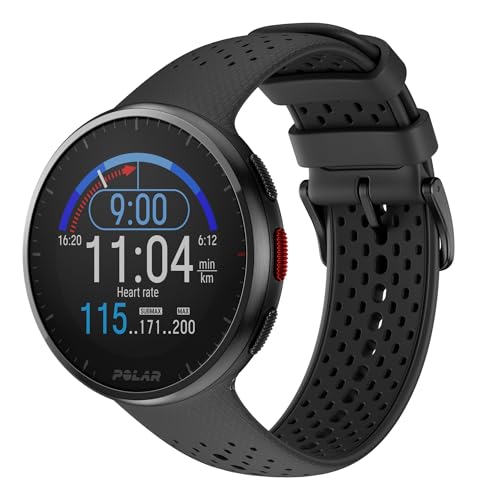 Polar Pacer ProCheck Price
 Around A$449 on Amazon AU. Polar's Pacer Pro is the watch for the coach who reads the training-science papers. Polar's heart-rate algorithms have been the reference standard in sports science for thirty years, the Pacer Pro's wrist heart-rate is among the more accurate at the price, and the watch's training-load and recovery model (Polar's Training Load Pro) is the most transparent on this list - you can see what the numbers are actually doing rather than getting a black-box score.
The MIP (memory-in-pixel) reflective display is the trade-off here. It's less impressive than AMOLED indoors, but in direct Australian sun it's the most legible display on this list and the battery life is longer because of it (up to 35 hours of continuous GPS training). For a strength and conditioning coach, sports physiologist, or anyone whose work is about reading the training response in detail, Polar Flow is the most analytical data platform you can get. Sits at A$449.
The good: Polar's heart-rate algorithms are the science-grade reference, Training Load Pro is transparent and explainable to clients, MIP display works in direct sun, 100 hours of GPS battery for the keen.
The trade-off: MIP display looks dated next to AMOLED indoors. Polar Flow's app polish is behind Garmin Connect's. Some training metrics need to be paired with a Polar H10 chest strap to get to full accuracy - that's another A$120 or so on Amazon AU.
How to Pick the Right Fitness Tracker for the Claim
The decision tree, roughly. If you want the cheapest defensible pick and the work-use case is straightforward, the Xiaomi Smart Band 9 at A$59 is the lowest-friction option.
If you're on a Samsung phone and want the data to land in Samsung Health, the Samsung Galaxy Fit3 at A$129 is the natural fit.
If you're a PT and want a single device that does most of what your job asks of it, the Fitbit Charge 6 at A$199 is the all-rounder.
If you need the band tucked discreetly under a long sleeve during client work, the Garmin Vivosmart 5 at A$229 is the right form factor.
If you run your business inside the Apple ecosystem, the Apple Watch SE (2nd Gen) at A$369 fits the rest of the kit.
If you're a running coach, the Garmin Forerunner 165 at A$449 is the watch you'll actually use to coach.
And if you're a strength and conditioning coach or sports physiologist who needs the training-science depth, the Polar Pacer Pro at A$449 is the most analytical option.
Our EOFY Pick
For most Australian PTs, fitness instructors, and allied health practitioners buying a fitness tracker before 30 June 2026, our pick is the Fitbit Charge 6. At A$199 it's under the A$300 single-year deduction threshold for salaried claimers with a defensible work-use case, well under the A$20,000 instant asset write-off ceiling for sole traders, it has built-in GPS and heart-rate broadcast to gym equipment, and the Premium subscription bundled for the first six months gives you the analytics layer that turns the data into something you can actually show a client. It's the most complete piece of professional kit on this list at the price.
If you specifically coach runners, the Garmin Forerunner 165 at A$449 is worth the extra spend. Buy before 30 June 2026 to claim against the 2025-26 financial year if you're eligible. After that, you're waiting another twelve months for the deduction window.
A Note on Tax
This article is general information only and is not tax advice. top7.au is not a registered tax agent. Whether you can claim a deduction for a fitness tracker depends on your circumstances - the nature of your work, your work-use percentage, your business structure, and current ATO rules. For most office-based workers, fitness trackers are private items and are not deductible. For PTs, fitness instructors, sports coaches, allied health professionals, and a narrow band of other roles where the device has a direct and necessary connection to producing income, the picture is different but still depends on the specifics. Talk to a registered tax agent or check ato.gov.au before claiming any deduction based on information you read here.
More EOFY Reading
For the bigger ticket WFH purchases in the same window, our best laptops for EOFY 2026 guide, the best monitor for tax claim Australia 2026, and the best smartwatch for sole trader productivity all sit alongside this guide. For the EOFY shopping calendar itself, the EOFY tech sales 2026 guide covers when each retailer's discounts start. For the broader category, the wearables category page has the full lineup, and our fitness tracker vs smartwatch guide covers the form-factor decision in more depth. Or browse the full laptops, monitors, and accessories categories for the rest of the EOFY catalogue.
Top Picks - Check Latest Prices


See Our Top 7 Wearables for Australia
Hand-picked and ranked by our editors — with honest pros, cons, and Aussie pricing.
More Wearables Reading
Best Massage Gun Australia 2026: 7 Picks Ranked on the Specs That Matter
The best massage gun Australia 2026 picks, ranked by amplitude, stall force and value. Live AUD prices, Amazon AU links and what to avoid.
Best Sunrise Alarm Clock Australia 2026: 7 Wake-Up Lights Ranked
The best sunrise alarm clock Australia 2026 picks - Philips, Lumie, Hatch and budget wake-up lights ranked for waking up in the dark on Amazon AU. AUD pricing.
Best Smartwatch for Sole Trader Productivity EOFY 2026 Australia - 7 Tax-Claimable Picks
Best smartwatch for sole trader productivity Australia EOFY 2026. Seven Amazon AU picks for tradies, freelancers, and consultants to claim before 30 June.
Weekly AU tech deals, in your inbox
We check prices on every product we cover daily. Once a week we send the biggest genuine price drops we spot - the ones worth your attention.
- One email a week, max
- No spam, ever
- Unsubscribe in one click