15 March 2026 · Laptops · AI-assisted · published by Jaco Olwagen · How we rank
Best Laptops Under A$1,000 in Australia (2026)
A practical guide to finding the best budget laptops under A$1,000 in Australia, covering what specs matter and which models deliver real value.
You Don't Need to Spend a Fortune
The sub-A$1,000 laptop market in Australia has improved dramatically over the past few years. Where this price bracket once meant compromising on everything, you can now get genuinely capable machines for uni work, home office duties, and everyday browsing. The trick is knowing what to prioritise and what corners you can afford to cut.
We've researched dozens of laptops available from Australian retailers like JB Hi-Fi, Officeworks, Harvey Norman, and online stores. Here's what actually matters when you're shopping on a budget.
One thing worth saying up front, because it has changed since we first wrote this guide: the sub-A$1,000 bracket has tightened considerably through 2026. Several models we previously recommended here have drifted past A$1,200, so every pick below has been re-checked against its live Amazon AU price rather than carried forward.
Quick Picks - Best Laptops Under A$1,000
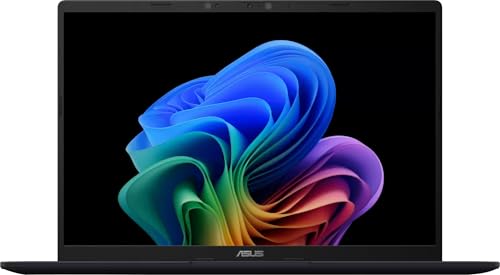 ASUS Vivobook 14 (Snapdragon X, 16GB/512GB)Check Price
 If you just want the short answer, these are the budget laptops we keep recommending. Every ASIN below is sold and shipped by Amazon AU from Australian stock - no import listings, no single-unit sellers.
The honest state of this bracket in September 2026: it has narrowed to a single machine. Both picks that were here in August are gone. One of them - the Lenovo IdeaPad Slim 3i - was not a price rise at all: Amazon re-pointed that listing to a different laptop, so the ASIN that used to sell a Core Ultra 5 with 16GB now sells a Core i3 machine at A$1,499. The ASUS Vivobook 15 alongside it went from A$999 to A$1,448, which puts it A$450 outside the guide it was sitting in. We re-screened the whole bracket and found exactly one laptop we would stand behind. It is below, and the section after it lists everything we rejected and why, so you can judge the screen for yourself.
| Product | Best For | Price (AUD) |
|---|---|---|
| ASUS Vivobook 14 (Snapdragon X, 16GB/512GB) | The only sub-A$1,000 laptop on Amazon AU that clears our spec floor on Australian stock | ~A$985 |
Tax angle for sole traders: if you're a sole trader, freelancer, or run a side business from home, a laptop bought now falls into the 2026-27 financial year, so you'll claim it in the return you lodge after 30 June 2027. Under the instant asset write-off, eligible small businesses can deduct the full business-use portion of a sub-A$1,000 laptop in one hit rather than depreciating it over several years. Keep the tax invoice and apportion the claim by how much you actually use the machine for work. The write-off threshold is legislated year to year, so confirm the current figure and your eligibility with your accountant or the ATO before you count on it.
What Specs Actually Matter Under A$1,000
Processor
The processor is the one spec you absolutely should not cheap out on, because it's the one thing you can never upgrade later. In 2026, look for at minimum an AMD Ryzen 5 7530U / Ryzen 5 7535U or Intel Core i5-1335U / Core i5-1340P. These chips handle multitasking, web browsing, document editing, and light photo work without breaking a sweat.
Avoid anything with a Celeron, Pentium, Intel N-series, or AMD Athlon processor. These chips are fine for a Chromebook but will leave you frustrated on a Windows machine within a year.
RAM
16GB is the sweet spot in 2026. Some budget laptops still ship with 8GB, which is workable but will feel cramped if you're the type to keep 20 browser tabs open while running a Zoom call. Many budget laptops have soldered RAM, meaning you can't upgrade later, so check before you buy.
Storage
256GB SSDs are still common at this price point, but we'd push for 512GB if you can swing it. A 256GB drive fills up fast once Windows, Office, and your files are on it. The good news is that most budget laptops let you swap or add storage later, so this is less of a dealbreaker than RAM.
Display
Most budget laptops have 1080p IPS screens, which is perfectly fine. Avoid anything with a TN panel or sub-1080p resolution - these are rare now but still pop up in the cheapest models. If you're spending time staring at a screen for uni or work, a decent display matters for your eyes.
Build Quality
At this price, you're getting plastic chassis. That's fine. What matters more is keyboard quality and trackpad size. You'll interact with these every single day, so if a laptop feels cheap to type on in the store, it won't magically improve at home.
What to Avoid
- Touchscreen laptops under A$800: The touchscreen adds cost that could've gone to better specs. Unless you specifically need touch (and most people don't), skip it.
- Gaming-branded budget laptops: A "gaming laptop" at A$900 will have a weak GPU that can't run modern games well anyway. You'll get a worse screen, worse battery life, and a bulkier chassis for no real benefit.
- 2-in-1 convertibles at the low end: Cheap 2-in-1s tend to have flimsy hinges and mediocre tablet experiences. A good standard laptop beats a bad convertible.
- Refurbished without warranty: Refurbished from reputable sellers (Dell Outlet, Apple Refurbished) is fine. Random eBay sellers offering "like new" ThinkPads with no warranty? Risky.
Models Worth Looking At
ASUS Vivobook 14 (Snapdragon X) - the one pick
At around A$985 the ASUS Vivobook 14 (Snapdragon X, 16GB/512GB) is the only machine in this bracket that clears every line of the spec checklist above on Australian stock: 16GB of RAM, a 512GB SSD, a current-generation processor with an NPU, and a 14-inch FHD screen. It is a Copilot+ PC, which at this price is genuinely unusual - the Copilot+ badge normally starts a few hundred dollars higher.
Read this before you buy it, because it is the one real catch. The Snapdragon X is an ARM processor, not an Intel or AMD x86 one. Windows on ARM in 2026 runs the overwhelming majority of everyday software natively or through emulation without you noticing - Office, Chrome, Edge, Teams, Zoom, Spotify, the Adobe apps most people use. What it still trips over is niche x86 software: some VPN and antivirus clients, older hardware drivers, a lot of scientific and engineering packages, some accounting software, most anti-cheat-protected games, and anything that installs a low-level driver. If your degree or your job depends on one specific Windows program, check that program's ARM support before you buy this laptop, not after. If your list is a browser, Office and video calls, none of this will ever come up and the battery life is better than any x86 machine at this price.
What you give up at A$985 is what you always give up here: plastic chassis, mediocre speakers, a passable rather than good webcam, and an ordinary FHD panel. Those are the standard compromises in this bracket and none of them are reasons to spend more.
One caveat on the evidence: this listing carries 4.6 stars but from only 7 Amazon AU ratings, which is a thin sample. That reflects a recent listing rather than a problem with the machine, but it does mean we are recommending it on its specification and its price rather than on a large pile of Australian owner feedback.
What we screened out, and why
This is worth showing, because "there is only one pick" is a claim you should be able to check. Everything below appeared in the sub-A$1,000 results on Amazon AU in September 2026 and was rejected:
- Grey imports. Three Acer Aspire Go 15 configurations at A$934 to A$969, and a Lenovo IdeaPad Slim 3X at A$972, all ship from Amazon US, UK or Germany rather than being sold as Australian stock. That means no Australian warranty to fall back on under the Australian Consumer Law, a possible duty charge, and an overseas return trip if something fails. Several were also down to three units.
- Backordered stock. The Australian-SKU Lenovo IdeaPad Slim 3X (Copilot+, 16GB/512GB) at A$977 is the machine we would have picked as a second option. Its listing is currently "temporarily out of stock, order now and we will deliver when available", which is not the same thing as being able to buy a laptop.
- Below the processor floor. The ASUS Vivobook Go 15 at A$899 has 16GB and 512GB, and it is genuinely Australian stock, so it looks like it should be here. It is built on the 4-core Ryzen 5 7520U class of chip, which is the exact processor tier the checklist above tells you to avoid. Buying 16GB of RAM attached to a weak CPU does not get you a fast laptop.
- Renewed business machines. HP EliteBooks, Dell Latitudes and ThinkPads at A$706 to A$949 with "(Renewed)" in the title. Refurbished from a manufacturer outlet with a warranty is a reasonable buy; refurbished from a marketplace seller with unclear warranty terms is a gamble on a machine that has already had one life.
- Unknown brands and N-series chips. A large share of what sits between A$700 and A$900 is unfamiliar brands built on Intel N-series processors, sometimes labelled as "gaming" laptops. The N-series is the tier this guide tells you to avoid, and a gaming label at A$800 does not change that.
If a genuine second sub-A$1,000 machine with 16GB, a current-generation processor and Australian stock appears, it goes straight in. The daily price check on this guide is looking for exactly that.
HP Laptop 15 / HP 250 G10
HP's budget range is solid if unspectacular. The HP Laptop 15 series is the sensible-if-unexciting option, and it turns up across Australian retail more consistently than anything else at this price. The HP 250 G10 is the business-oriented version that sometimes pops up at Officeworks - it's the same basic laptop with a more professional look and occasionally better support options.
HP's advantage is availability. You'll find these at almost every Australian retailer, making it easy to see them in person before buying.
Where to Buy in Australia
Prices for budget laptops can vary by A$50-$100 across retailers for the exact same model. Here's our general advice:
- JB Hi-Fi: Good range, competitive pricing, and they'll often price-match. Staff knowledge varies wildly by store.
- Officeworks: Price-beat guarantee (5% off any competitor's price) makes them worth checking. Their range is more limited but they stock the popular models.
- Harvey Norman: Often more expensive at sticker price, but they run regular sales and bundle deals. Worth checking during sale periods.
- Amazon Australia: Occasionally has the best prices, especially during Prime Day and Black Friday. Check seller ratings carefully.
- Direct from manufacturer: Lenovo and Dell's Australian websites sometimes have exclusive configurations or student discounts that beat retail.
The Student Angle
If you're buying for uni, check whether your institution has a student purchase program. Many Australian universities partner with Lenovo, Dell, or HP to offer discounted pricing. These deals can knock A$100-$200 off retail, which at this price point is significant.
Apple's MacBook Air M2 occasionally dips to around A$1,199 with education pricing, which is technically over our budget but worth considering if you can stretch. The M2 Air remains an exceptional laptop that will last longer and hold its resale value better than any Windows machine at this price. But strictly under A$1,000, Windows is your territory.
Our Bottom Line
For most Aussie buyers shopping under A$1,000 on Amazon AU right now, the ASUS Vivobook 14 (Snapdragon X, 16GB/512GB) at around A$985 is the pick, with the one caveat that it is an ARM machine - check any must-have Windows program supports ARM before you commit.
The wider point is worth saying plainly, because it is more useful than any single recommendation: this bracket has thinned out badly through 2026. If you can stretch a couple of hundred dollars, the choice widens enormously. If you cannot, the two things that will hurt you most in two years are a weak processor and 8GB of RAM, so hold that line even if it means waiting for a sale rather than buying a cheaper machine now.
Don't overthink it. A budget laptop with a current-gen Ryzen 5 or Core i5, 16GB RAM, and a 512GB SSD will handle everything a typical user throws at it. Save the agonising for when you're spending two grand.
One last thing worth planning for: if you're using the laptop at a desk at home, pairing it with an external monitor transforms the experience. Modern budget laptops almost all ship with a USB-C port, but not every USB-C port supports video output or laptop charging through a single cable. Before buying a monitor, skim our USB-C monitors explained guide - it covers which budget laptops actually support docking via USB-C, what Power Delivery wattage you need, and how to avoid the "it's charging but very slowly" trap that catches a lot of first-time buyers. Also worth a look: our best budget 4K monitors under A$500 picks. For more laptop options, see our best laptops for uni students, step up to a gaming laptop under A$1,500, or browse the full laptops ranking.
Top Picks - Check Latest Prices


See Our Top 7 Laptops for Australia
Hand-picked and ranked by our editors — with honest pros, cons, and Aussie pricing.
More Laptops Reading
Best Laptop for Video Editing Australia 2026: 7 Picks From $1,799 to $4,799
The best laptop for video editing in Australia 2026, from a $1,799 Asus V16 to the M5 MacBook Pro. Every pick price-checked and in stock on Amazon AU.
Best Gaming Laptop Australia 2026: 5 Picks Actually In Stock Right Now
The best gaming laptops you can buy in Australia in 2026, from a $1,389 starter to an RTX 5070 desktop replacement. Every pick verified in stock on Amazon AU with real AUD prices.
Best USB-C Hubs for MacBook Australia 2026: Top Picks for Travel, Home Office & Dual Monitors
The best USB-C hubs for MacBook in Australia 2026 - compact travel hubs to dual-monitor docking stations. AUD prices with Amazon AU affiliate links.
Weekly AU tech deals, in your inbox
We check prices on every product we cover daily. Once a week we send the biggest genuine price drops we spot - the ones worth your attention.
- One email a week, max
- No spam, ever
- Unsubscribe in one click