12 August 2026 · Laptops · AI-assisted · published by Jaco Olwagen · How we rank
Best Laptop for Video Editing Australia 2026: 7 Picks From $1,799 to $4,799
The best laptop for video editing in Australia 2026, from a $1,799 Asus V16 to the M5 MacBook Pro. Every pick price-checked and in stock on Amazon AU.
Best Laptop for Video Editing Australia 2026: What Actually Moves the Timeline
Video editing is the one job that finds every weak spot in a laptop. A machine that feels quick in Chrome will cough the moment you drop three 4K tracks on a timeline and ask for a colour grade on top. So picking the best laptop for video editing in Australia in 2026 is less about headline specs and more about which bottleneck bites you first: the media engine, the memory, or the fan noise at 11pm when you are still exporting. This guide sorts the field by what you actually edit, not by what looks good on a spec sheet.
Everything below is live on Amazon AU and was price-checked against its listing the day this went up. If you want the wider view, our full Top 7 laptops ranking covers general-purpose machines, and the best gaming laptop guide is worth a look too, because in 2026 a lot of the best-value editing hardware is sold with RGB keyboards and a dragon on the lid.
Honesty note: we have not personally cut a feature film on all seven of these. Picks lean on published specs, chip-class benchmarks, and Australian owner reviews. Prices wander, so treat every dollar figure as a snapshot.
Quick Picks - Top 3 Laptops for Video Editing
| Laptop | Best For | Price (AUD) |
|---|---|---|
| Apple MacBook Pro 14-inch (M5, 16GB, 1TB) | Best overall | ~A$3,178 |
| Lenovo LOQ 17IRX10 (RTX 5070, 24GB) | Best value Windows | ~A$2,460 |
| Asus V16 (RTX 4050, 16GB) | Best budget pick | ~A$1,799 |
What actually matters in a video editing laptop
 Samsung T9 2TBCheck Price
 Hardware decode beats raw grunt. Most of the pain in editing is not maths, it is decoding compressed footage. Apple silicon has a dedicated media engine that chews H.264, HEVC and ProRes without touching the CPU, which is why an M-series Mac scrubs a 4K timeline smoothly while a beefier Windows laptop stutters. On the Windows side, NVIDIA's NVENC/NVDEC block does the same job, and that is the real reason a discrete GPU matters more than its gaming frame rate suggests.
Memory is where budgets go to die. 16GB is the working floor for 1080p and light 4K. If you run Premiere with After Effects open, or you are cutting multicam, 24GB to 32GB is the difference between working and waiting. On a Mac the memory is soldered, so whatever you buy is what you own for five years. On most Windows machines it is a SODIMM you can swap for a couple of hundred bucks later, which quietly changes the value maths.
The screen is a tool, not a garnish. If you deliver anything colour-critical, you want at least 100% sRGB coverage and ideally DCI-P3. A 1920x1200 panel is fine for cutting; it is not fine for grading. And whatever the laptop screen does, a good second display helps more than another 8GB of RAM. Our home office monitor guide covers the sensible options.
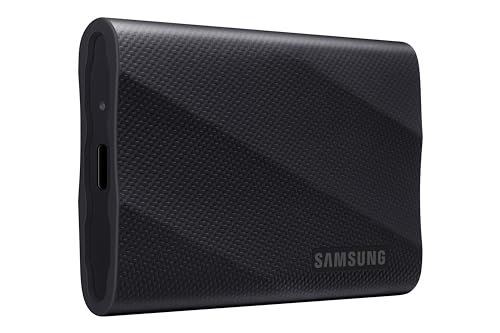
Storage fills faster than you think. An hour of 4K from a modern mirrorless is roughly 50GB. A 512GB internal drive is one weekend of shooting. Buy 1TB internal where you can, then put the archive on an external. A Samsung T9 2TB will hold a few projects and keep up with a 4K timeline, and there are cheaper options in our portable SSD guide.
1. Apple MacBook Pro 14-inch (M5, 16GB, 1TB) - Best Laptop for Video Editing Overall
 Apple MacBook Pro 14-inch (M5, 16GB, 1TB)Check Price
 Around A$3,178 on Amazon AU, and still the machine most editors end up on. The M5 chip carries the same media engine architecture that made the M-series famous: ProRes encode and decode in hardware, HEVC handled without breaking a sweat, and a 10-core GPU that Final Cut and DaVinci Resolve both know how to use. The 1TB drive is the spec that matters here, because Apple's storage upgrades are the most expensive real estate in computing.
The 14-inch Liquid Retina XDR panel is the other reason it sits at number one. It is a mini-LED display with extreme dynamic range, which means HDR grading on a laptop is actually a sensible idea rather than a compromise. Add near-silent fans on a typical 1080p or 4K cut and roughly a full working day of battery, and you have a machine that edits on a train from Southern Cross without hunting for a powerpoint.
The good: hardware ProRes, an HDR-grade screen, silence under load, and battery life that no Windows creator laptop gets near.
The trade-off: 16GB is soldered. If your timelines are heavy or you live in After Effects, step up rather than regret it.
2. Apple MacBook Pro 14-inch (M5 Pro, 24GB, 2TB) - Best for Heavy 4K and Multicam
 Apple MacBook Pro 14-inch (M5 Pro, 24GB, 2TB)Check Price
 About A$3,997 buys the 15-core CPU, 16-core GPU M5 Pro with 24GB of unified memory and a genuinely useful 2TB of storage. This is the configuration for people whose timelines have layers: multicam interviews, 4K with noise reduction, colour work that keeps a node tree busy. The extra GPU cores show up most in Resolve, where effects and noise reduction scale almost directly with GPU grunt.
The 2TB drive is the sleeper feature. It means your current projects live on the fast internal drive rather than shuffling between externals mid-edit, which saves more real time over a year than any benchmark chart.
The good: a big jump in GPU-bound export and effects work, and enough storage to actually work off the internal drive.
The trade-off: the thick end of four grand, and for straight cutting the base M5 does the job for eight hundred less.
3. Apple MacBook Pro 16-inch (M5 Pro, 24GB, 1TB) - Best Big-Screen Mac
 Apple MacBook Pro 16-inch (M5 Pro, 24GB, 1TB)Check Price
 Around A$4,799. The argument for the 16-inch is not the chip, it is the timeline. Two extra inches of 16.2-inch Liquid Retina XDR is roughly one more track visible without scrolling, and if you edit on the laptop screen rather than a desk monitor, that is the upgrade you will feel every single day. The bigger chassis also holds a larger battery and more cooling, so sustained exports hold their clocks for longer.
Three Thunderbolt 5 ports, an SDXC slot and full-size HDMI mean the dongle bag mostly stays home, which is not nothing when you are unloading cards on location. If you do need to expand a smaller Mac, our MacBook USB-C hub guide has the sensible picks.
The good: the best laptop editing screen you can buy, with cooling to match, plus card reader and HDMI built in.
The trade-off: two-plus kilos and close to five grand. This is a desk machine that happens to fold.
4. Lenovo LOQ 17IRX10 (RTX 5070, 24GB, 1TB) - Best Value Windows Editing Laptop
 Lenovo LOQ 17IRX10 (RTX 5070, 24GB, 1TB)Check Price
 A$2,460 for an RTX 5070, a 24-core i7-14700HX, 24GB of DDR5 and a 1TB SSD is the sort of spec-per-dollar that makes Mac pricing look rude. The 17.3-inch panel is FHD rather than QHD, but it is rated at 100% sRGB, which is the coverage figure that actually matters for web and broadcast delivery. For a Premiere or Resolve editor working in Rec.709, that is the box ticked.
The RTX 5070's encode block chews through H.264 and HEVC exports, and 24GB of RAM is a much more comfortable starting point than the 16GB that most laptops at this price ship with. It is sold as a gaming laptop, and it looks like one, but the hardware inside is exactly what an editor wants.
The good: current-generation GPU encode, 24GB RAM as standard, a full terabyte, and a screen big enough to lay out a proper timeline.
The trade-off: 1080p on a 17-inch panel is not sharp, and it is a heavy, plastic thing with loud fans. Battery life on a real edit is a couple of hours, not a workday.
5. Acer Predator Triton Neo 16 (Ultra 9 185H, RTX 4070) - Best Windows Screen for Colour Work
 Acer Predator Triton Neo 16 (Ultra 9 185H, RTX 4070)Check Price
 About A$3,408, and the reason it is here is the panel: a 16-inch WQXGA+ 3200x2000 IPS display, Calman Verified and rated to 100% DCI-P3. That is the closest a Windows laptop gets to a MacBook Pro for grading, and it is a meaningfully different tool to the sRGB panels the rest of the Windows field ships. Underneath sits a 16-core Core Ultra 9 185H, an RTX 4070 with 8GB, 32GB of LPDDR5X and a 1TB NVMe drive.
32GB is the spec that earns its keep. It is the point where Premiere stops swapping, After Effects previews stop crawling, and you can leave Lightroom open beside the edit without everything sighing.
The good: a 3.2K DCI-P3 screen worth grading on, 32GB of memory, and Thunderbolt 4 for fast external storage.
The trade-off: the RTX 4070 is last-generation now, and at three and a half grand you are close to MacBook Pro money without the battery life or the quiet.
6. MSI Crosshair A16 (Ryzen 9 8940HX, 32GB, 1TB) - Best for Timelines That Never Close
 MSI Crosshair A16 (Ryzen 9 8940HX, 32GB, 1TB)Check Price
 A$3,058 gets a Ryzen 9 8940HX, 32GB of DDR5, a 1TB PCIe drive and a 16-inch QHD+ 2560x1600 240Hz panel with an RTX 5060. The CPU is the story: a high core-count desktop-class chip is exactly what you want for CPU-bound work like transcoding proxies, rendering complex After Effects comps, or exporting formats the GPU cannot accelerate.
The QHD+ resolution is the practical sweet spot too. It gives you real estate for a timeline, a program monitor and a bin without the scaling headaches a 4K laptop panel brings.
The good: serious multi-core throughput, 32GB standard, and a sharp 16:10 panel at a sane resolution.
The trade-off: the RTX 5060's 8GB of VRAM is the ceiling here, and it will be the first thing you hit on heavy Resolve node trees.
7. Asus V16 (RTX 4050, 16GB, 512GB) - Best Budget Laptop for Video Editing
 Asus V16 (RTX 4050, 16GB, 512GB)Check Price
 A$1,799 is roughly the floor for a laptop that can edit 4K without making you hate the process. The Core 7 240H, RTX 4050 and 16GB of DDR5 will cut 1080p all day and handle 4K if you are sensible about proxies. The 16-inch WUXGA 144Hz panel is a working screen rather than a grading screen, so plan on delivering to web and checking colour elsewhere.
The 512GB drive is the obvious pinch point, and the fix is cheap: an external SSD for media, internal for the system and cache. If your budget is tighter than this, our laptops under $1,000 guide is the honest next stop, though editing on one is a patience exercise.
The good: real NVENC hardware encoding and 16GB of DDR5 under A$1,800.
The trade-off: 512GB fills in a weekend, and the 6GB of VRAM limits effects work.
Mac or Windows for video editing in Australia?
The short version. If you shoot on a mirrorless or a phone and deliver H.264 or ProRes, a Mac will feel faster than its price suggests, run cool and quiet, and last a workday unplugged. If you need raw CPU throughput, want 32GB without a four-figure Apple tax, or run software that only exists on Windows, a Windows creator laptop gives you far more hardware per dollar and the option to upgrade RAM and storage later.
The Australian pricing wrinkle worth knowing: MacBook pricing barely moves outside big sale events, while Windows creator and gaming laptops discount hard and often. If you can wait for a sale window, the Windows picks here can drop several hundred dollars. Our Prime Day deals roundup tracks when those windows open.
Video editing laptop comparison
| Laptop | CPU / GPU | RAM / Storage | Price (AUD) |
|---|---|---|---|
| MacBook Pro 14 (M5) | M5 10-core | 16GB / 1TB | ~A$3,178 |
| MacBook Pro 14 (M5 Pro) | M5 Pro 15-core | 24GB / 2TB | ~A$3,997 |
| MacBook Pro 16 (M5 Pro) | M5 Pro 18-core | 24GB / 1TB | ~A$4,799 |
| Lenovo LOQ 17IRX10 | i7-14700HX / RTX 5070 | 24GB / 1TB | ~A$2,460 |
| Acer Predator Triton Neo 16 | Ultra 9 185H / RTX 4070 | 32GB / 1TB | ~A$3,408 |
| MSI Crosshair A16 | Ryzen 9 8940HX / RTX 5060 | 32GB / 1TB | ~A$3,058 |
| Asus V16 | Core 7 240H / RTX 4050 | 16GB / 512GB | ~A$1,799 |
How much laptop do you actually need?
Social clips and YouTube in 1080p: the Asus V16 handles it, and so does a MacBook Air. Do not spend more than you have to.
4K client work, weddings, property, corporate: this is the MacBook Pro 14 M5 or the Lenovo LOQ 17. Both give you the memory and storage headroom that stops the workflow becoming admin.
Multicam, heavy grading, motion graphics: the MacBook Pro 14 M5 Pro, or if money is genuinely no object, the MacBook Pro 14 M5 Max (36GB, 2TB) at around A$5,926 is the fastest thing here by a distance.
Learning, or editing between other jobs: a MacBook Air 15-inch (M4, 16GB, 512GB) at around A$2,399 is a lovely machine that will cut 4K happily and weighs next to nothing. It just runs out of thermal headroom on long exports.
The verdict
For most Australians the best laptop for video editing in 2026 is the MacBook Pro 14-inch M5. It is not the cheapest and it is not the fastest, but the media engine, the XDR panel and the silence add up to a machine that gets out of the way. If you would rather keep eight hundred dollars and do not mind fan noise, the Lenovo LOQ 17IRX10 is the value play, and the Asus V16 proves you can start editing properly for under A$1,800.
Building out the rest of the edit suite? Start with our Top 7 laptops ranking, then sort your media with the best portable SSD picks or a proper home NAS for the archive. A second screen from the home office monitor guide will do more for your workflow than another upgrade tier, and if you are still choosing a camera, the vlogging camera guide pairs neatly with everything here.
Top Picks - Check Latest Prices

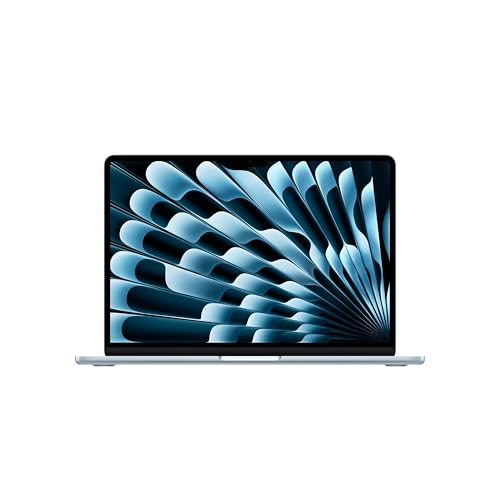

See Our Top 7 Laptops for Australia
Hand-picked and ranked by our editors — with honest pros, cons, and Aussie pricing.
More Laptops Reading
Best Gaming Laptop Australia 2026: 5 Picks Actually In Stock Right Now
The best gaming laptops you can buy in Australia in 2026, from a $1,389 starter to an RTX 5070 desktop replacement. Every pick verified in stock on Amazon AU with real AUD prices.
Best USB-C Hubs for MacBook Australia 2026: Top Picks for Travel, Home Office & Dual Monitors
The best USB-C hubs for MacBook in Australia 2026 - compact travel hubs to dual-monitor docking stations. AUD prices with Amazon AU affiliate links.
Best Laptops to Buy Before EOFY 2026 - Tax-Deductible Picks for Australians
EOFY is coming and the ATO's instant asset write-off makes June 30 the best date on the laptop calendar. Our top picks for every budget in Australia 2026.
Weekly AU tech deals, in your inbox
We check prices on every product we cover daily. Once a week we send the biggest genuine price drops we spot - the ones worth your attention.
- One email a week, max
- No spam, ever
- Unsubscribe in one click