As an Amazon Associate, top7.au earns from qualifying purchases. Product prices and availability are accurate as of the date/time indicated and are subject to change. Any price and availability information displayed on amazon.com.au at the time of purchase will apply.
Rankings re-checked weekly · Last re-checked 14 October 2026
·Prices updated daily·AI-assisted, run by Jaco Olwagen
3 quick taps — we'll match you to a pick using the same scores we rank with.
The picks, in order
7 picks
Number one at the top, number 7 at the bottom. The tier label on each card says which price bracket it sits in.
★Editor's Choice
1
70mai
70mai A810S
4kfront-and-rearstarvis-2
ValueOn Sale
Rank #1
70mai A810S
Our Verdict
The image-quality pick - 4K on Sony's STARVIS 2 IMX678 sensor for the cleanest night footage on this list, with a rear camera included.
Why it's number one: Leads on video quality and features, with the STARVIS 2 IMX678 sensor, GPS, voice control and a rear camera in the box; no critic reviews of this model on our outlets, and a 4.4-star Amazon rating from 37 owners on a new listing.
If your priority is the cleanest possible footage - the kind that turns a plate you almost read into one you definitely can - the A810S is the image-quality pick. It records 4K up front on Sony's STARVIS 2 IMX678 sensor, the sort of hardware more often found in security cameras, and the difference shows after dark: less smear under headlights and more recoverable detail in the shadows where budget cams turn to mush. A rear camera is in the box, and 70mai's app is among the more polished in the category. One honesty note: this is a newer Amazon AU listing, so the local review count is still small - but the 70mai A810 line is well regarded among dash cam owners and the early ratings here are strong. At A$279.99, down from A$349.99, it's real money by dash cam standards, but if you regularly drive at night it's the one worth stretching to.
Video
9.3
Reliability
9.3
Features
9.6
Owners
7.7
Owners is the 4.4★ Amazon AU rating from 40 reviews, weighted toward the category average when there are few. Fewer than two published reviews of this exact model, so the owner rating carries that weight too. Tick marks show the category average.
How we scored it
Each measure is marked against the category's rubric, where 10 is the best you can buy, 8 is strong, 6 is basic but sound and 4 falls short. The bars show that mark on the Top7 scale (a 6 reads as 7.0, an 8 as 8.5); the notes quote the rubric mark.
Video 9.3 (rubric 9): 4K30 on the Sony STARVIS 2 IMX678 with HDR and a 1080p HDR rear camera; Notebookcheck's launch report notes the sensor is shared with the T800; no review of this model yet.
Reliability 9.3 (rubric 9): Supercapacitor per the Amazon listing, buffered emergency recording per Notebookcheck, 24-hour parking mode with a hardwire kit sold separately.
Features 9.6 (rubric 9.5): Built-in GPS, Wi-Fi 6 app, voice control, ADAS and a rear camera in the box per Notebookcheck; 4G remote viewing needs the optional hardwire kit.
Pros
+ Best night footage on this list thanks to the IMX678 sensor
+ 4K front and rear coverage in one kit
+ Polished 70mai app experience
Cons
− Newer AU listing, so the review count is small for now
The A119M Pro is VIOFO's new small front camera, and it replaces the A119 Mini 2 in this slot now that the older model has sold out on Amazon AU. It keeps what made the Mini 2 the one to buy if you want evidence-grade footage without a camera staring back at you from the windscreen, and moves the resolution up to 4K. Sony's STARVIS 2 IMX678 sensor records 4K at 30fps with HDR, which balances bright sky against dark road and helps keep number plates legible in tunnels, rain and at night, and a circular polarising filter comes in the box to cut windscreen glare. The body is low-profile enough to tuck behind the rear-view mirror, out of your eyeline and out of a thief's. A supercapacitor replaces the lithium battery most budget cameras use, the right call for an Australian summer, because capacitors tolerate the cabin heat of a parked car that swells and kills batteries. Wi-Fi 6 moves clips to your phone quickly, quad-mode GPS stamps speed and location, and buffered parking mode records 15 seconds before and 30 seconds after an impact when hardwired. It records the road ahead only, so if you want the rear covered you need one of the two-channel picks.
Video
9.3
Reliability
9.6
Features
8.1
Owners
7.4
Owners is the 4.3★ Amazon AU rating from 355 reviews, weighted toward the category average when there are few. Fewer than two published reviews of this exact model, so the owner rating carries that weight too. Tick marks show the category average.
How we scored it
Each measure is marked against the category's rubric, where 10 is the best you can buy, 8 is strong, 6 is basic but sound and 4 falls short. The bars show that mark on the Top7 scale (a 6 reads as 7.0, an 8 as 8.5); the notes quote the rubric mark.
Video 9.3 (rubric 9): 4K 30fps on the STARVIS 2 IMX678 with HDR and a CPL filter per the Amazon listing; no allowlisted review has tested plates at night yet, so short of the top anchor.
Reliability 9.6 (rubric 9.5): Supercapacitor and three parking modes with buffered recording (15 s before, 30 s after) per the Amazon listing; no published cabin-heat rating.
Features 8.1 (rubric 7.5): Wi-Fi 6 app, quad-mode GPS and voice control per the Amazon listing; front camera only.
Pros
+ 4K HDR on a STARVIS 2 sensor for clearer plates at night and in glare
+ Small enough to hide behind the rear-view mirror
+ Supercapacitor survives hot parked cars where batteries fail
+ Wi-Fi 6 transfers, quad-mode GPS and voice control
+ CPL filter included
Cons
− Front channel only - a rear camera costs extra
− 4K is at 30fps, where the old Mini 2 recorded 2K at 60fps
The F7NP is the dash cam most Australian drivers should buy, and its 25,000-plus reviews suggest plenty already have. You get a 4K front camera built around Sony's STARVIS 2 sensor - the current benchmark for night sensitivity - plus a rear camera, so a tailgater or a rear-end shunt is on file as well as whatever happens ahead. The detail that seals the value case is the included 128GB memory card: most rivals ship without one, and a proper high-endurance card adds a meaningful chunk to the real price. Footage transfers to your phone over Wi-Fi through the app, and parking-mode surveillance is available once you add a hardwire kit. It isn't the absolute best image on this list - the 70mai A810S below edges it at night - but at around A$170 with everything in the box, nothing else here covers both ends of the car this well for the money.
Video
8.9
Reliability
8.9
Features
8.9
Owners
7.8
Owners is the 4.4★ Amazon AU rating from 25,498 reviews, weighted toward the category average when there are few. Fewer than two published reviews of this exact model, so the owner rating carries that weight too. Tick marks show the category average.
How we scored it
Each measure is marked against the category's rubric, where 10 is the best you can buy, 8 is strong, 6 is basic but sound and 4 falls short. The bars show that mark on the Top7 scale (a 6 reads as 7.0, an 8 as 8.5); the notes quote the rubric mark.
Video 8.9 (rubric 8.5): 4K front on a STARVIS 2 sensor with WDR night vision plus a rear camera; the card says the A810S edges it at night; no critic review of the F7NP.
Reliability 8.9 (rubric 8.5): Built-in supercapacitor and 24-hour parking mode per the Amazon listing, though parking needs a hardwire kit sold separately; 4.4 stars across 25,000-plus owners.
Features 8.9 (rubric 8.5): Built-in GPS per the Amazon listing, 5.8GHz Wi-Fi app, 3.18-inch screen and a rear camera plus 128GB card in the box; no voice control or LTE.
Pros
+ 4K front plus rear coverage at a mid-range price
+ STARVIS 2 sensor gives genuinely good night footage
+ 128GB card included - rivals make you buy your own
+ Huge review base at a strong rating
Cons
− Parking mode needs a hardwire kit sold separately
The A810Lite is the sensible middle of this list: front and rear coverage with HDR processing and - the feature that matters most for evidence - built-in GPS, all for A$129.99. GPS means every clip carries your location and speed, which is exactly what you want when an insurer or the other party disputes what happened; without it, footage proves the collision but not the context. HDR helps with the classic Australian failure cases - harsh sun behind a plate at dusk, headlight glare at night - by balancing the bright and dark parts of the frame instead of blowing them out. Card support runs up to 512GB, so you can keep a long loop-recording history rather than having the moment you needed overwritten. It doesn't have the 4K sensor of its A810S sibling and heavy croppers will notice the difference, but for most drivers this is the best mix of coverage, evidence quality and price on the list.
Video
8.5
Reliability
9.3
Features
8.9
Owners
7.7
Owners is the 4.4★ Amazon AU rating from 40 reviews, weighted toward the category average when there are few. Fewer than two published reviews of this exact model, so the owner rating carries that weight too. Tick marks show the category average.
How we scored it
Each measure is marked against the category's rubric, where 10 is the best you can buy, 8 is strong, 6 is basic but sound and 4 falls short. The bars show that mark on the Top7 scale (a 6 reads as 7.0, an 8 as 8.5); the notes quote the rubric mark.
Video 8.5 (rubric 8): 4K front and 1080p rear with HDR per the Amazon listing; Notebookcheck calls the front camera excellent after dark but notes frame rates drop in dual-channel mode.
Reliability 9.3 (rubric 9): Supercapacitor rated to 85 C cabin heat per Notebookcheck, smart parking guardian mode with the hardwire kit sold separately.
Features 8.9 (rubric 8.5): Built-in GPS, Wi-Fi 6 app and a rear camera in the box per Notebookcheck; 4G live view needs the optional UP04 kit; no voice control listed.
Pros
+ Built-in GPS stamps speed and location on every clip
+ Front and rear coverage with HDR at a value price
At A$89.98 the GKU is the cheapest way onto this list with both a 4K front camera and a rear camera - a combination that usually costs twice as much. Its 6,400-plus reviews at 4.3 stars say the formula works: footage that's genuinely good in daylight, an app that connects over 5GHz Wi-Fi so pulling clips to your phone doesn't take all morning, and parking-mode support once it's wired in. Be realistic about what the price buys, though. Night footage is a step behind the STARVIS 2 cameras above - plates are readable, but you'll work harder for them - and there's no memory card in the box, so add a high-endurance microSD to the real cost. For a second car, a teenager's first car, or anyone who wants front-and-rear evidence without spending REDTIGER or 70mai money, it's an easy recommendation.
Video
7.8
Reliability
8.1
Features
7.8
Owners
7.4
Owners is the 4.3★ Amazon AU rating from 4,450 reviews, weighted toward the category average when there are few. Fewer than two published reviews of this exact model, so the owner rating carries that weight too. Tick marks show the category average.
How we scored it
Each measure is marked against the category's rubric, where 10 is the best you can buy, 8 is strong, 6 is basic but sound and 4 falls short. The bars show that mark on the Top7 scale (a 6 reads as 7.0, an 8 as 8.5); the notes quote the rubric mark.
Video 7.8 (rubric 7): 4K front and 1080p rear with WDR; the card says night footage is a step behind the STARVIS 2 picks; no sensor named and no critic review.
Reliability 8.1 (rubric 7.5): Amazon listing claims a supercapacitor and 24-hour parking with a hardwire kit sold separately, though its spec table lists lithium-ion; 4.3 stars from 6,500 owners.
Features 7.8 (rubric 7): 5GHz Wi-Fi app and a rear camera in the box, but no GPS, no voice control and no card per the Amazon listing.
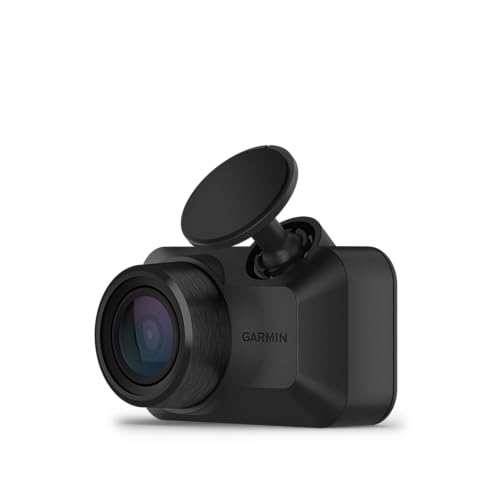
The Mini 3 is for drivers who don't want to see their dash cam - or advertise it. It's genuinely tiny, tucking in behind the rear-view mirror where it neither blocks your view of the road nor invites a smashed window from someone who spots a gadget worth stealing. Resolution is 1080p through a 140-degree lens, which is honest mid-pack: fine for demonstrating fault in an intersection dispute, less reliable for a plate three lanes over, and a clear step behind the 2K and 4K picks above. There's no screen - setup and clip review happen through Garmin's phone app. What you're paying for is the badge and the size: Garmin's build quality and support sit a level above the generic brands. The 4.2-star rating is the lowest on this list, with some owners finding app pairing fiddly, so weigh that against the brand appeal - but as a discreet, fit-and-forget recorder from a company you've heard of, it fills a real niche.
Video
7.4
Reliability
7.8
Features
7.4
Owners
7.1
Critics
8.5
Owners is the 4.2★ Amazon AU rating from 431 reviews, weighted toward the category average when there are few. Critics averages 2 published reviews. Tick marks show the category average.
How we scored it
Each measure is marked against the category's rubric, where 10 is the best you can buy, 8 is strong, 6 is basic but sound and 4 falls short. The bars show that mark on the Top7 scale (a 6 reads as 7.0, an 8 as 8.5); the notes quote the rubric mark.
Video 7.4 (rubric 6.5): 1080p HDR through a 140-degree polarised lens; TechRadar reads plates easily by day but says they cannot be read as reliably at night.
Reliability 7.8 (rubric 7): Provisional: neither review nor the listing says whether it uses a battery or a supercapacitor; parking guard needs a hardwire kit plus a paid Vault subscription per TechRadar.
Features 7.4 (rubric 6.5): Garmin Drive app, voice control and optional Vault cloud storage per Tom's Guide, but no GPS, no screen and no rear camera.
At A$50.99 the KAWA answers the question 'what's the cheapest dash cam actually worth buying?' It records at 3K resolution up front - noticeably sharper than the 1080p cameras that usually occupy this price bracket - connects to your phone over Wi-Fi, and takes voice commands so you can lock a clip without fumbling for a button mid-drive. The 360-degree rotating mount is more useful than it sounds: spin the camera toward the cabin to record a rideshare interaction or an incident at the driver's window. Be clear about what you give up, though. It's front-only, so a rear-end collision or tailgater is captured only by implication, and there's none of the parking-mode sophistication or low-light sensor quality of the picks above. Think of it as A$51 of insurance for the daily commute: if it captures one not-at-fault dispute in its lifetime, it has paid for itself many times over. Add a high-endurance card and you're set.
Video
7.0
Reliability
7.8
Features
7.4
Owners
7.7
Owners is the 4.4★ Amazon AU rating from 1,165 reviews, weighted toward the category average when there are few. Fewer than two published reviews of this exact model, so the owner rating carries that weight too. Tick marks show the category average.
How we scored it
Each measure is marked against the category's rubric, where 10 is the best you can buy, 8 is strong, 6 is basic but sound and 4 falls short. The bars show that mark on the Top7 scale (a 6 reads as 7.0, an 8 as 8.5); the notes quote the rubric mark.
Video 7.0 (rubric 6): 3K front only with WDR; the card says night footage trails every other pick; no sensor named and no critic review.
Reliability 7.8 (rubric 7): Amazon listing claims a built-in supercapacitor and 24/7 parking mode with an optional hardwire kit; its spec table says lithium; no independent testing.
Features 7.4 (rubric 6.5): Wi-Fi app, voice control and a 360-degree rotating mount per the card; no GPS and front only; the listing says a 32GB card is included.
We researched the dash cams available on Amazon Australia, evaluating each on video quality by day and - critically - at night, front-and-rear coverage, GPS and speed stamping, parking-mode surveillance options, app experience, and heat tolerance for Australian summer cabins. Cameras were matched to what drivers actually need for insurance evidence rather than spec-sheet bragging rights, then scored across video quality, features, reliability and value at AU retail prices. Prices are in AUD and refreshed regularly.
Scored on Video quality day and night 45%, Reliability in heat and parking mode 35%, Features 20%, plus owner ratings and critic reviews
The whole point of a dash cam is reading a number plate off the footage later. 1080p manages it when the other car is close and the light is good; 2K and 4K give you far more margin when it's further away, moving fast, or half in shadow. Night is where cheap cameras fall apart - a modern low-light sensor makes the difference between a readable plate and a white smear under headlights. If you drive after dark regularly, weight night performance over the headline resolution number.
Front-Only vs Front-and-Rear
A front camera covers most incidents, but rear-end collisions and tailgaters - among the most disputed claim types - happen behind you. A rear camera closes that gap and typically adds modest cost at the budget end. Front-only still makes sense if you want maximum image quality per dollar or a simpler one-cable install; just go in knowing what's off camera.
Parking Mode Needs Wiring
Every brand advertises parking mode; few explain that it needs a hardwire kit (or a dedicated dash cam battery pack) to actually work, because the camera has no meaningful battery of its own. Wired in, the camera can wake on impact or motion and capture the car-park hit-and-run that a plugged-into-the-socket cam sleeps through. Budget for the kit and, unless you're handy, an auto electrician to fit it.
GPS and Speed Stamping
GPS embeds your location and speed in every clip. In a dispute, that's the difference between footage that shows a collision and footage that shows a collision while you were doing the limit. Some cameras build GPS in, some sell it as an add-on mount, some skip it entirely - if you're buying for insurance evidence, treat it as near-essential.
Heat, Mounts and Memory Cards
An Australian car cabin in January is brutal, and it's what kills cheap dash cams and cheap memory cards. Prefer cameras designed around capacitors rather than lithium batteries where you can, and always buy a high-endurance microSD card - standard cards aren't rated for the constant loop recording and heat, and a corrupted card discovered after a crash defeats the entire purpose. Check the mount too: adhesive mounts survive heat better than suction in most cars.
A dash cam is the cheapest insurance-dispute resolver an Australian driver can buy. When the other party swears you ran the red, when a crash-for-cash driver brake-checks you on the motorway, or when you come back to a scraped bumper and an empty car park, footage settles it in minutes - no witnesses, no he-said-she-said, no excess paid on a not-at-fault claim you couldn't prove. For the price of a tank or two of fuel, that's hard to argue with.
This list runs from a A$51 front camera that's genuinely worth buying to premium 4K front-and-rear systems with the latest low-light sensors. Along the way there's a best-overall pick with the memory card already in the box, a A$130 camera with built-in GPS for speed-stamped evidence, a budget 4K front-and-rear kit under A$90, an enthusiast favourite built to survive years of Australian summers, and an ultracompact Garmin for drivers who want their camera invisible.
Every pick has been verified available on Amazon AU at Australian prices - no grey imports with US plugs and no models that never officially made it here. Prices are in AUD and refreshed regularly.
Dash Cams — Frequently Asked Questions
Are dash cams legal in Australia?+
Yes - recording the road from your own car is legal across Australia. The practical rules are about mounting and audio: the camera must not obstruct the driver's view (position it behind the rear-view mirror or low in a corner of the windscreen), and cabin audio recording can raise consent issues in some jurisdictions, particularly for rideshare drivers. Windscreen-obstruction and surveillance rules vary by state and territory, so check your state's rules before installing - but a sensibly mounted dash cam is a normal, legal accessory in every Australian state.
Will dash cam footage actually help an insurance claim?+
It's often decisive. In a disputed claim - the other driver denies fault, there are no independent witnesses, or stories conflict - clear footage can settle liability quickly and protect your no-claim bonus and excess on a not-at-fault claim. It's also one of the few defences against staged crash-for-cash incidents. GPS-stamped footage helps further because it shows your speed at the time. Lock or back up the relevant clip as soon as possible after an incident so loop recording doesn't overwrite it.
Do I really need the rear camera?+
If you can afford it, yes. Rear-end collisions and tailgating incidents are among the most common and most disputed claim types, and a front-only camera captures them only by implication. A rear camera also covers reversing incidents and some car-park damage. That said, a good front-only camera like the VIOFO A119 V3 still covers the majority of scenarios - it's a reasonable trade if your budget is tight or you want maximum image quality per dollar up front.
Does parking mode drain my car battery?+
Not if it's installed properly. Parking mode requires a hardwire kit connected to the fuse box, and decent kits include a low-voltage cutoff that shuts the camera down before your battery drops below reliable starting level - you set the cutoff threshold and the camera stops drawing power once it's reached. The alternative is a dedicated dash cam battery pack, which charges while you drive and powers the camera when parked without touching the car battery at all. What won't work is expecting parking surveillance from a camera that's only plugged into a 12V socket that goes dead with the ignition.
What SD card should I buy for a dash cam?+
A high-endurance microSD card, full stop. Dash cams overwrite the card continuously in a hot cabin, which wears out standard cards - often silently, so you only discover the corruption when you go looking for crash footage that isn't there. High-endurance cards from the major brands are rated for exactly this duty cycle and heat. Check your camera's maximum supported capacity, buy the card from a reputable seller to avoid fakes, and format it in the camera every few months.
Reference
After you've bought one
Owner's records for dash cams— the maker's support channels, Australian warranty, manual and firmware links, origin, and each product's ranking history here, including the picks we have retired.