As an Amazon Associate, top7.au earns from qualifying purchases. Product prices and availability are accurate as of the date/time indicated and are subject to change. Any price and availability information displayed on amazon.com.au at the time of purchase will apply.
Rankings re-checked weekly · Last re-checked 14 October 2026
·Prices updated daily·AI-assisted, run by Jaco Olwagen
3 quick taps — we'll match you to a pick using the same scores we rank with.
The picks, in order
7 picks
Number one at the top, number 7 at the bottom. The tier label on each card says which price bracket it sits in.
★Editor's Choice
1
Anker
Anker Prime Power Bank 20,100mAh (220W)
20100mah220wlaptop-charging
PremiumOn Sale
Rank #1
Anker Prime Power Bank 20,100mAh (220W)
Our Verdict
The laptop bank that replaced Anker's 737 - 220W across three ports, a colour status screen and app control, still under the carry-on limit.
Why it's number one: Top marks for output with the category's highest total at 220W across three ports and 100W from a single USB-C port, a near-top capacity mark for a flight-legal 20,100mAh cell, and the category's best owner rating at 4.7 stars from 650 Amazon reviews; no allowlisted outlet has reviewed this exact model yet.
Anker's Prime line is where the old 737 went, and the 20,100mAh model is the one to buy if the thing that dies on you is a laptop rather than a phone. Total output climbs to 220W across three ports, with a single USB-C port able to push 100W on its own - enough to charge a 16-inch MacBook Pro at close to wall-socket speed while a phone and a pair of earbuds feed off the other two. The 20,100mAh cell works out to roughly 72 watt-hours, comfortably under the 100Wh carry-on ceiling airlines enforce, so it goes in hand luggage without a conversation at the gate. The colour display is a genuine step up on the 737's segment readout: it shows live wattage per port, remaining capacity as a percentage and estimated time to full, and the companion app lets you cap charging speed to be gentler on the cells. Two-way charging means the bank itself refills at 100W, so a flat unit is usable again inside half an hour. It is heavy and it is not cheap, but for a travelling laptop user nothing in this list comes close.
Output
10.0
Capacity
9.6
Portability
7.0
Owners
8.8
Owners is the 4.7★ Amazon AU rating from 653 reviews, weighted toward the category average when there are few. Fewer than two published reviews of this exact model, so the owner rating carries that weight too. Tick marks show the category average.
How we scored it
Each measure is marked against the category's rubric, where 10 is the best you can buy, 8 is strong, 6 is basic but sound and 4 falls short. The bars show that mark on the Top7 scale (a 6 reads as 7.0, an 8 as 8.5); the notes quote the rubric mark.
Output 10.0 (rubric 10): Rated 220 W total per the card, with 100 W from a single USB-C port: over the 140 W line, charges a 16-inch MacBook Pro near wall speed.
Capacity 9.6 (rubric 9.5): 20,100 mAh (about 72 Wh, flight-legal) per the card, the 20,000 band, plus 0.5 for three ports.
Portability 7.0 (rubric 6): Card says heavy and dense for everyday pocket carry; flight-legal, but a backpack bank rather than a pocket one. No weight figure on the card.
Pros
+ 220W total output across three ports charges a laptop at full speed
+ About 72Wh - well under the 100Wh carry-on limit
+ Colour display shows live wattage, percentage and time to full
+ Recharges itself at 100W, so a flat bank is usable again in ~30 minutes
+ App control lets you cap charge speed to preserve battery health
Cons
− Heavy and dense for everyday pocket carry
− Well over double the price of the INIU banks
− Far more capability than a phone-only user will ever need
The UGREEN 165W Power Bank solves the most common power bank problem: leaving the cable at home. Two USB-C cables are built into the body (one good for 140W, the other 65W), and there's a USB-A and a USB-C port on top, so it can charge four things at once. The 25,000mAh battery is enough for several phone charges or a good top-up of a laptop, and the 140W port charges most laptops at full speed. With a 90W input it refills in about two hours. At 550g it's no featherweight, but it's lighter per milliamp-hour than most laptop banks. It's sold by UGREEN's Australian store and rated 4.6 stars by more than 700 owners. No allowlisted outlet has reviewed this exact model yet.
Output
10.0
Capacity
10.0
Portability
7.0
Owners
8.5
Owners is the 4.6★ Amazon AU rating from 779 reviews, weighted toward the category average when there are few. Fewer than two published reviews of this exact model, so the owner rating carries that weight too. Tick marks show the category average.
How we scored it
Each measure is marked against the category's rubric, where 10 is the best you can buy, 8 is strong, 6 is basic but sound and 4 falls short. The bars show that mark on the Top7 scale (a 6 reads as 7.0, an 8 as 8.5); the notes quote the rubric mark.
Output 10.0 (rubric 10): Rated 140W from a single port and 165W total per the listing: the 140W-or-more band.
Capacity 10.0 (rubric 10): 25,000mAh scores 10 on the card rule; the built-in-cables bonus is capped at 10.
Portability 7.0 (rubric 6): 550g for 25,000mAh per the listing, about 220g per 10,000mAh: a little lighter than the 592g UGREEN Nexode 200W but still heavy for its capacity.
UGREEN's flagship bank is for the traveller carrying more than one serious device. Where the Anker 737 pushes 140W down a single cable, the Nexode splits 200W of total output across three ports, so a laptop can charge at full speed while a phone and a tablet share the rest - the difference between queueing your devices and doing them all at once. The 25,000mAh capacity works out to roughly 92 watt-hours, which still clears the 100Wh carry-on line for Australian airlines, though only just; this is about as big as a flight-legal bank sensibly gets. It's correspondingly large and heavy - this one lives in a backpack, not a pocket. At A$119.99, down from over A$200, it's the best-value laptop-class bank on Amazon AU, and the pick for digital nomads, photographers and anyone whose bag holds a laptop, a phone and a camera that all hit zero on the same day.
Output
10.0
Capacity
10.0
Portability
6.6
Owners
7.8
Critics
9.0
Owners is the 4.4★ Amazon AU rating from 3,393 reviews, weighted toward the category average when there are few. Critics averages 2 published reviews. Tick marks show the category average.
How we scored it
Each measure is marked against the category's rubric, where 10 is the best you can buy, 8 is strong, 6 is basic but sound and 4 falls short. The bars show that mark on the Top7 scale (a 6 reads as 7.0, an 8 as 8.5); the notes quote the rubric mark.
Output 10.0 (rubric 10): Rated 200 W total across three ports per the card; Trusted Reviews lists the two USB-C ports at 140 W and 100 W, well over the 140 W line.
Capacity 10.0 (rubric 10): 25,000 mAh (about 92 Wh, still flight-legal) per the card, the top band, with three ports; the half-point port bonus is capped at 10.
Portability 6.6 (rubric 5.5): Card calls it large and heavy, strictly backpack territory; Trusted Reviews lists 592 g and 155 x 54 x 51 mm, T3 says just under 600 g.
The Anker 737 is the laptop power bank that proved you can carry a charger for a MacBook Pro in your bag. Its main USB-C port puts out up to 140W, enough to charge power-hungry laptops at full speed, and the 24,000mAh (86.4Wh) battery sits under the airline limit, so it travels in your carry-on. A second USB-C port gives 100W and there's a USB-A port for older gadgets. The colour display shows the watts going in and out of each port and how long a recharge will take, which TechRadar singled out when it rated the 737 4.5 out of 5. At around 630g it's a brick next to a phone-sized bank, but that's the price of laptop power. It's sold by Anker's Australian store, and more than 17,000 owners rate it 4.6 stars.
Output
10.0
Capacity
9.6
Portability
6.6
Owners
8.5
Owners is the 4.6★ Amazon AU rating from 17,347 reviews, weighted toward the category average when there are few. Fewer than two published reviews of this exact model, so the owner rating carries that weight too. Tick marks show the category average.
How we scored it
Each measure is marked against the category's rubric, where 10 is the best you can buy, 8 is strong, 6 is basic but sound and 4 falls short. The bars show that mark on the Top7 scale (a 6 reads as 7.0, an 8 as 8.5); the notes quote the rubric mark.
Output 10.0 (rubric 10): Rated 140W maximum from one USB-C port per the listing and TechRadar: the 140W-or-more band.
Capacity 9.6 (rubric 9.5): 24,000mAh (86.4Wh) scores 9 on the card rule, plus 0.5 for three ports.
Portability 6.6 (rubric 5.5): About 630g for 24,000mAh, roughly 260g per 10,000mAh and heavier than the 592g UGREEN Nexode 200W: backpack territory, though flight-legal.
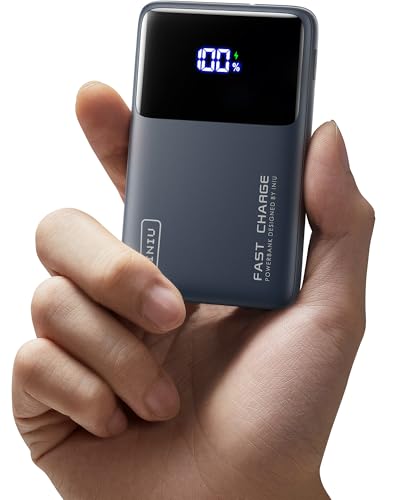
The pocket pick. INIU's 10,000mAh unit is the bank you can actually forget is in a jacket pocket or a small bag, and at A$32.99 it's the cheapest product on this list. The surprise is the 45W Power Delivery output - most banks this size top out around 20-22.5W. That means it fast-charges any phone at full speed, and in an emergency it will keep an ultraportable laptop or a Nintendo Switch ticking over too, though at this capacity you're really buying it for phone duty: expect around one and a half to two full charges after conversion losses. Nearly 22,000 reviews at 4.6 stars suggest the reliability matches its bigger sibling at the top of this list. The honest truth about 20,000mAh banks is that many people eventually stop carrying them; this one is light enough that it just lives in the bag permanently. Pair it with the 20K INIU rather than choosing between them.
Output
7.8
Capacity
7.8
Portability
9.3
Owners
9.2
Owners is the 4.8★ Amazon AU rating from 1,522 reviews, weighted toward the category average when there are few. Fewer than two published reviews of this exact model, so the owner rating carries that weight too. Tick marks show the category average.
How we scored it
Each measure is marked against the category's rubric, where 10 is the best you can buy, 8 is strong, 6 is basic but sound and 4 falls short. The bars show that mark on the Top7 scale (a 6 reads as 7.0, an 8 as 8.5); the notes quote the rubric mark.
Output 7.8 (rubric 7): Rated 45 W Power Delivery per the card, the 45 to 64 W band: full-speed phone charging and enough to keep an ultraportable or a Switch ticking over.
Capacity 7.8 (rubric 7): 10,000 mAh per the card, the 10,000 band, about 1.5 to 2 phone charges; the card gives no port count, so no port adjustment.
Portability 9.3 (rubric 9): Card calls it light and genuinely pocketable, small enough to live in a jacket pocket permanently; no weight figure on the card.
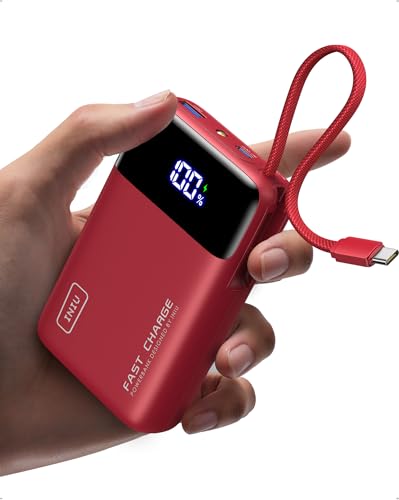
This INIU replaces the 22.5W model that used to sit here, which is no longer sold on Amazon AU, and it is the upgrade that model needed. The 45W output fast-charges any current phone at full speed and will top up a tablet or a small USB-C laptop, where the old 22.5W bank could only manage phones. Capacity is the same 20,000mAh - three to four full phone charges once conversion losses are counted, and around 74 watt-hours, comfortably under the 100Wh airline limit for carry-on. The USB-C cable is built into the case, so there is no cable to forget, and it can charge three devices at once. INIU calls it the smallest 20,000mAh bank on the market; we have not seen a published weight, so treat that as the maker's claim. It is sold by INIU's Australian store and shipped by Amazon, with a three-year warranty and a 4.5-star rating from more than 1,700 owners.
Output
7.8
Capacity
9.6
Portability
8.5
Owners
7.8
Owners is the 4.4★ Amazon AU rating from 1,940 reviews, weighted toward the category average when there are few. Fewer than two published reviews of this exact model, so the owner rating carries that weight too. Tick marks show the category average.
How we scored it
Each measure is marked against the category's rubric, where 10 is the best you can buy, 8 is strong, 6 is basic but sound and 4 falls short. The bars show that mark on the Top7 scale (a 6 reads as 7.0, an 8 as 8.5); the notes quote the rubric mark.
Output 7.8 (rubric 7): Rated 45 W per the Amazon listing, the 45 to 64 W band: fast-charges phones and tops up small laptops.
Capacity 9.6 (rubric 9.5): 20,000 mAh per the listing, the 20,000 band, plus 0.5 for a built-in USB-C cable and three devices charging at once.
Portability 8.5 (rubric 8): The listing calls it the smallest 20,000 mAh bank on the market; no published weight, so compact for its class rather than proven pocketable.
Pros
+ 45W output fast-charges phones and tops up tablets and small laptops
+ Built-in USB-C cable, and it charges three devices at once
+ 20,000mAh, about 74Wh - well under the 100Wh carry-on limit
+ Three-year INIU warranty and 4.5 stars from 1,700+ owners
Cons
− 45W is not enough to charge a MacBook Pro at full speed
Magnetic banks solve the real annoyance of portable charging: the awkward phone-and-brick sandwich dangling from a cable. This UGREEN snaps to the back of any MagSafe-compatible iPhone (iPhone 12 onward) and charges wirelessly while you keep using the phone one-handed - genuinely convenient at an airport gate or on the couch. Be clear-eyed about the trade, though: wireless charging is slower and less efficient than a cable, so when you're in a hurry, plug into the 20W USB-C port instead, which fast-charges iPhones and Android phones alike. The 10,000mAh capacity is good for one to two full charges depending on how much of it goes over the magnet rather than the wire. At A$47.98 - less than half its A$101 list price - it's the affordable way into the magnetic-bank category, and with 18,000-plus reviews it's far better proven than the no-name MagSafe-style banks flooding Amazon.
Output
6.3
Capacity
7.4
Portability
8.9
Owners
7.8
Owners is the 4.4★ Amazon AU rating from 19,048 reviews, weighted toward the category average when there are few. Fewer than two published reviews of this exact model, so the owner rating carries that weight too. Tick marks show the category average.
How we scored it
Each measure is marked against the category's rubric, where 10 is the best you can buy, 8 is strong, 6 is basic but sound and 4 falls short. The bars show that mark on the Top7 scale (a 6 reads as 7.0, an 8 as 8.5); the notes quote the rubric mark.
Output 6.3 (rubric 5): Rated 20 W wired USB-C per the card and TechRadar (15 W wireless), the 20 to 29 W band.
Capacity 7.4 (rubric 6.5): 10,000 mAh per the card, the 10,000 band, less 0.5 for a single wired port: TechRadar lists one USB-C plus the magnetic pad.
Portability 8.9 (rubric 8.5): TechRadar lists 220 g, a slim slab that rides on the back of a MagSafe iPhone per the card; just over the 200 g per 10,000 mAh mark.
We researched the power banks and USB-C chargers available on Amazon Australia, evaluating each on real output wattage and charging-standard support (USB Power Delivery and PPS), capacity against weight and size, port count and flexibility, build quality and brand track record, and value at Australian retail prices. Banks were matched to the devices they'll actually charge - phones, tablets or laptops - rather than headline milliamp-hours, and every battery was checked against the 100Wh carry-on limit. Prices are in AUD and refreshed regularly.
Scored on Power output 35%, Capacity and ports 35%, Portability 30%, plus owner ratings and critic reviews
A 10,000mAh bank gives roughly one and a half to two full phone charges once conversion losses are counted, and it's the biggest size that genuinely fits in a pocket. A 20,000mAh bank roughly doubles that and suits weekends away or tablet duty, but it lives in a bag rather than a pocket. Beyond 20,000mAh you're into laptop territory - bigger, heavier, and worth it only if you have the devices to feed.
Wattage: What PD and PPS Actually Mean
Output wattage decides what a bank can charge. 20-30W fast-charges any phone; 45-65W handles tablets and lighter laptops; 100W+ charges full-size laptops properly. USB Power Delivery (PD) is the universal fast-charging standard nearly every modern device speaks, and PPS is the refinement that lets Samsung and other Android flagships hit their top charging speeds. If a bank lists PD it will fast-charge iPhones and most Androids; PPS is the bonus to look for if you carry a Galaxy.
Flying with Power Banks in Australia
Power banks must travel in carry-on luggage - never in a checked bag, where a damaged lithium battery can't be reached. Under 100Wh (roughly 27,000mAh) no airline approval is needed, and every bank on this list is under that line. Airlines layer their own rules on top - some cap how many spare batteries you carry, and several now restrict using or charging power banks in-flight - so check your carrier's battery policy before a trip. A bank found in checked luggage can simply be confiscated.
Magnetic Qi2 and MagSafe-Style Banks
Magnetic banks snap to the back of a compatible iPhone (or a phone with a magnetic case) and charge wirelessly while you keep using it - no cable, no phone-and-brick sandwich. The trade-off is speed and efficiency: wireless charging is slower than a cable and wastes more of the bank's capacity as heat. Treat the magnet as the convenience option and the USB-C port as the fast option - the best magnetic banks give you both.
Why One GaN Brick Replaces Several Chargers
Gallium nitride (GaN) electronics switch faster and waste less energy as heat than older silicon designs, so a GaN charger delivers far more wattage from a smaller, cooler brick. The practical upshot: one multi-port GaN charger can fast-charge a laptop, phone and earbuds simultaneously from a single power point, replacing three or four separate chargers on your desk or in your travel bag. Just note that total output is shared - plug in more devices and each gets a smaller slice.
Somewhere in the last few years, everything you carry started charging over USB-C - phone, laptop, earbuds, tablet, e-reader, camera. That's quietly great news, because it means one good power bank or one good wall charger can now do the job of the bag of mismatched bricks and cables most of us still lug around. The hardware has caught up too: gallium nitride (GaN) chargers pack serious wattage into travel-size bricks, and laptop-class power banks that were exotic two years ago are now genuinely affordable.
This list covers the lot. There are pocket-sized banks from about A$40 that live in a jacket pocket, 140W-plus banks that will recharge a full-size laptop mid-flight, one with two USB-C cables built in so you can't leave the cable at home, and a magnetic MagSafe-style bank that snaps to the back of an iPhone.
Every pick is chosen for Australian buyers: all prices are in AUD, every product is available on Amazon AU, and every battery here sits under the 100Wh limit Australian airlines apply to carry-on power banks, so nothing on this list will be stopped at the gate.
Power Banks & Chargers — Frequently Asked Questions
Can I take a power bank on a plane in Australia?+
Yes - but only in carry-on luggage, never in a checked bag. Australian aviation rules require lithium power banks to travel in the cabin, and anything under 100Wh (roughly 27,000mAh) needs no airline approval - every bank on this list is under that line. Airlines add their own rules on top: some cap how many spare batteries you can carry, and several international carriers now restrict actually using or charging power banks in-flight, so check your airline's battery policy before you fly. A power bank found in checked luggage can simply be confiscated.
How many phone charges will I get from a 10,000mAh or 20,000mAh power bank?+
Fewer than the raw numbers suggest - voltage conversion and heat typically eat 30-40% of a bank's rated capacity. As a rule of thumb, a 10,000mAh bank delivers roughly one and a half to two full charges of a modern phone, and a 20,000mAh bank roughly three to four. Phones with bigger batteries sit at the low end of those ranges, and charging wirelessly over a magnetic connection loses more capacity again than charging by cable.
Can a power bank charge a laptop?+
Only if it has enough USB-C Power Delivery output - as a rough floor, 60W or more for genuine charging while you work, and 100W+ to charge a large laptop at proper speed. Most everyday banks top out at 20-45W, which will slow a laptop's discharge at best. On this list, the Anker 737 (140W) and the UGREEN Nexode 200W are built specifically for laptop duty. Check that your laptop charges over USB-C first - some gaming machines only accept their own barrel-plug charger.
Do GaN chargers get hot?+
They get warm under sustained full load - that's normal for any charger - but GaN (gallium nitride) designs run noticeably cooler than the older silicon chargers they replace, because they convert power more efficiently and waste less of it as heat. That efficiency is exactly why a 100W GaN brick can be smaller than the 61W silicon charger many laptops shipped with. If any charger becomes too hot to comfortably touch, unplug it and reduce the number of devices drawing from it.
Will these charge both iPhone and Android?+
Yes. Everything on this list charges over USB-C using the Power Delivery standard, which iPhones (USB-C since the iPhone 15, or via a USB-C-to-Lightning cable before that) and effectively all Android phones support. The one partial exception is the magnetic UGREEN bank: its wireless magnetic attachment is designed for MagSafe iPhones or phones fitted with a magnetic case, but its USB-C port still fast-charges any phone the normal wired way.
Reference
After you've bought one
Owner's records for power banks & chargers— the maker's support channels, Australian warranty, manual and firmware links, origin, and each product's ranking history here, including the picks we have retired.