As an Amazon Associate, top7.au earns from qualifying purchases. Product prices and availability are accurate as of the date/time indicated and are subject to change. Any price and availability information displayed on amazon.com.au at the time of purchase will apply.
Rankings re-checked weekly · Last re-checked 17 September 2026
·Prices updated daily·AI-assisted, run by Jaco Olwagen
3 quick taps — we'll match you to a pick using the same scores we rank with.
The picks, in order
7 picks
Number one at the top, number 7 at the bottom. The tier label on each card says which price bracket it sits in.
★Editor's Choice
1
Apple
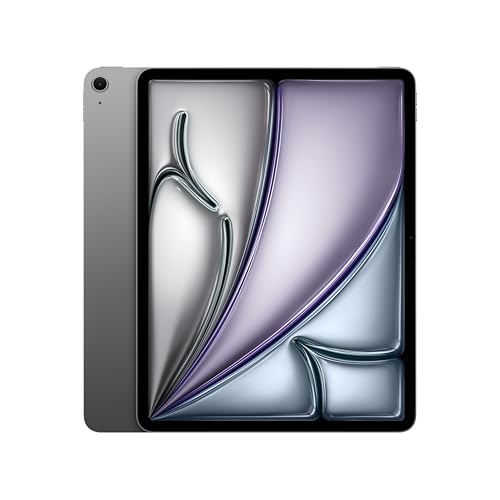
Apple iPad Pro 13" M5 (Wi-Fi + Cellular, 256GB)
Editor's ChoiceBest DisplayBest Performance
Premium
Rank #1
Apple iPad Pro 13" M5 (Wi-Fi + Cellular, 256GB)
Our Verdict
The most powerful tablet money can buy - a genuine laptop replacement with a jaw-dropping display and desktop-class performance that now pushes AI capabilities further than ever.
Why it's number one: Top marks for display, performance and ecosystem, 5/5 from T3 and Stuff with 4.5/5 from Tom's Guide (average 4.83/5 from three 13-inch reviews) and a 4.9-star Amazon rating from 8 reviews; its only soft spot is Apple's 10-hour battery rating.
Apple's iPad Pro 13-inch with the M5 chip takes what was already the best tablet on the planet and pushes it further. The tandem OLED Ultra Retina XDR display remains the best screen on any tablet, with colours that are ridiculously accurate and infinite contrast. The M5 chip brings up to 3.5x faster AI processing compared to the M4, and the base model now ships with 12GB of unified memory - a 50% bump that makes a real difference in demanding workflows. The addition of Wi-Fi 7 with Apple's N1 chip delivers noticeably faster wireless performance, and cellular models benefit from Apple's C1X modem with up to 50% faster data speeds. Pair it with the Apple Pencil Pro and Magic Keyboard, and you've got a machine that genuinely replaces a laptop for most workflows. The catch? It's still eye-wateringly expensive once you add accessories, and iPadOS continues to have frustrating limitations that prevent it from being a true laptop replacement for everyone.
Display
10
Performance
10
Battery
8
Ecosystem
10
Owners
8.7
Critics
9.7
Owners is the 4.9★ Amazon AU rating from 8 reviews, weighted toward the category average when there are few. Critics averages 3 published reviews. Tick marks show the category average.
How we scored it
Display 10: 13-inch tandem OLED at 120 Hz with 1,000 nits full-screen and 1,600 nits HDR peak per Apple's spec and T3; the card calls it the best screen on any tablet and Stuff rates it 5/5.
Performance 10: M5 with 12 GB of unified memory on the 256 GB model per Apple's spec; Tom's Guide calls it the most powerful tablet ever, its 1 TB test unit carrying 16 GB.
Battery 8: Apple rates it at up to 10 hours of surfing the web on Wi-Fi or watching video, the 10 to 12 hour band; Tom's Guide measured 13 h 18 min of web browsing at 150 nits.
Ecosystem 10: Apple Pencil Pro and Magic Keyboard support per Tom's Guide and T3, the iPadOS desktop-class app library and Apple's long update record; the card says it replaces a laptop for most workflows.
The sweet spot in Apple's lineup just got better - the M4 chip brings serious performance gains and expanded Apple Intelligence features to the best-value iPad.
The iPad Air M4 launched in March 2026 and is the most capable iPad Air yet. Apple has upgraded from the M3 to the M4 chip - the same processor that debuted in the iPad Pro - bringing a significant leap in CPU performance, GPU capability, and Neural Engine throughput for Apple Intelligence tasks. The 13-inch Liquid Retina display is the same excellent panel as before: bright, colour-accurate, and great for everything from creative work to streaming. Apple Pencil Pro support means designers and note-takers are well served, and the Magic Keyboard Folio turns it into a genuine laptop alternative. The 128GB Wi-Fi model listed here costs well over a thousand dollars less than the iPad Pro while delivering performance that genuinely rivals it in everyday use. The trade-offs are the same as always - no OLED display, no ProMotion 120Hz, and no expandable storage - but for most Australians who want a premium iPad experience without the Pro price tag, this is the one to get.
Display
8
Performance
9.5
Battery
8
Ecosystem
10
Owners
8.6
Critics
9.5
Owners is the 5★ Amazon AU rating from 2 reviews, weighted toward the category average when there are few. Critics averages 2 published reviews. Tick marks show the category average.
How we scored it
Display 8: 13-inch fully laminated LCD with an anti-reflective coating at 600 nits per Apple's spec and T3, but 60 Hz and no OLED; the sharp laminated LCD band.
Performance 9.5: M4 with 12 GB of unified memory per Apple's spec and TechRadar; T3 (5/5) calls it pro performance at an amateur price, one step behind the iPad Pro's M5.
Battery 8: Apple rates the 13-inch at up to 10 hours of surfing the web on Wi-Fi or watching video from a 36.59 Wh battery, the 10 to 12 hour band.
Ecosystem 10: Apple Pencil Pro and Magic Keyboard support per TechRadar and T3, the same iPadOS app library as the Pro and Apple's long update record; the card calls it a genuine laptop alternative.
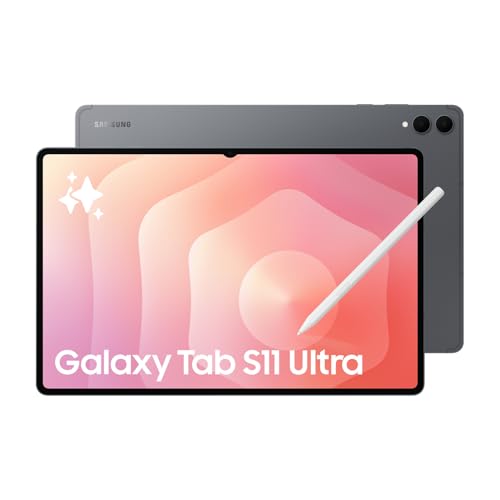
The Galaxy Tab S11 Ultra is the natural successor to one of the best Android tablets ever made, and Samsung has made all the right upgrades. The 14.6-inch Dynamic AMOLED 2X display with anti-reflective coating remains class-leading - it is enormous, vibrant, and works well in bright Aussie sunlight. The big news is under the hood: Samsung has switched to the Snapdragon 8 Elite, a genuine leap in performance and efficiency over the Snapdragon 8 Gen 3. AI-powered features through Galaxy AI are more capable than ever, with real-time translation, Smart Select improvements, and enhanced Note Assist. S Pen is still included in the box, Samsung DeX mode still turns it into a near-desktop experience, and the 11,200mAh battery comfortably lasts a full day of heavy use. Buy the Australian-stock listing rather than one of the grey imports beside it - it carries Samsung Australia's warranty, and it currently sells for comfortably less than Samsung's own A$2,099 RRP for the Wi-Fi 256GB model.
Display
9.5
Performance
8.5
Battery
9
Ecosystem
8.5
Owners
8.8
Critics
8.3
Owners is the 5★ Amazon AU rating from 8 reviews, weighted toward the category average when there are few. Critics averages 4 published reviews. Tick marks show the category average.
How we scored it
Display 9.5: 14.6-inch 120 Hz Dynamic AMOLED 2X at 1,600 nits peak with an anti-reflective coating per T3 and Stuff; Stuff notes it does not diffuse glare quite like the iPad Pro's nano-texture glass.
Performance 8.5: MediaTek Dimensity 9400+ with 12 GB of RAM per TechRadar, Tom's Guide and Stuff, not the Snapdragon 8 Elite on our card; TechRadar calls the chipset performance disappointing for the price.
Battery 9: 11,600 mAh per TechRadar; T3 quotes Samsung's official figure of 23 hours and found it accurate in mixed use, the 13-hour-plus band; Tom's Guide measured 12 h 13 min of web use.
Ecosystem 8.5: S Pen in the box, Samsung's Book Cover Keyboard sold separately and DeX desktop mode per Tom's Guide and the card, with seven years of updates per TechRadar; Android tablet apps trail iPadOS.
The Galaxy Tab S10 FE+ that used to sit here has gone unbuyable on Amazon AU across every Australian variant, and the Tab S11 is a considerably better tablet anyway. Moving from the FE line to the proper S-series means a real AMOLED panel rather than an LCD, and the difference is obvious the moment you watch anything or edit a photo - deep blacks, high brightness for outdoor use, and a 120Hz refresh rate that makes the whole system feel quicker. The flagship silicon inside handles heavy multitasking, Adobe apps and demanding games without the stutter the FE showed once you pushed it, and 12GB of RAM means split-screen work actually stays resident. The S Pen is still included in the box, which continues to be one of the strongest arguments for buying Samsung over Apple here, and Samsung DeX turns the tablet into a genuine windowed desktop with a keyboard attached - the closest thing Android has to a laptop replacement. This is the 5G model, so it holds its own mobile connection rather than depending on a phone hotspot, and it is the AU retail listing with an Australian plug and local warranty. At just under $1300 it costs meaningfully more than the FE+ did, and 128GB fills up fast, though microSD expansion takes the sting out of that.
Display
9
Performance
8.5
Battery
9
Ecosystem
8.5
Owners
8.5
Critics
7.9
Owners is the 4.5★ Amazon AU rating from 2 reviews, weighted toward the category average when there are few. Critics averages 3 published reviews. Tick marks show the category average.
How we scored it
Display 9: 11-inch 120 Hz Dynamic AMOLED 2X with HDR per Notebookcheck; Expert Reviews is disappointed it lacks the Ultra's anti-reflective coating, so it sits just below it.
Performance 8.5: MediaTek Dimensity 9400+ with 12 GB of RAM per Notebookcheck (88%) and TechRadar; Notebookcheck lists the fast SoC as a pro and Expert Reviews calls the performance killer.
Battery 9: 8,400 mAh per Notebookcheck; TechRadar cites Samsung's claim of 18 hours of continuous streaming, the 13-hour-plus band, and says the brand is usually accurate on such matters.
Ecosystem 8.5: S Pen included per Expert Reviews and TechRadar, Book Cover Keyboard Slim sold separately per Notebookcheck, DeX and 5G on the card, and seven years of updates per Expert Reviews.
Xiaomi's newest mid-ranger steps up to the Snapdragon 8s Gen 4 and a bigger 9200mAh battery while keeping the standout 3.2K 144Hz display and premium metal build - the best value Android tablet for performance per dollar.
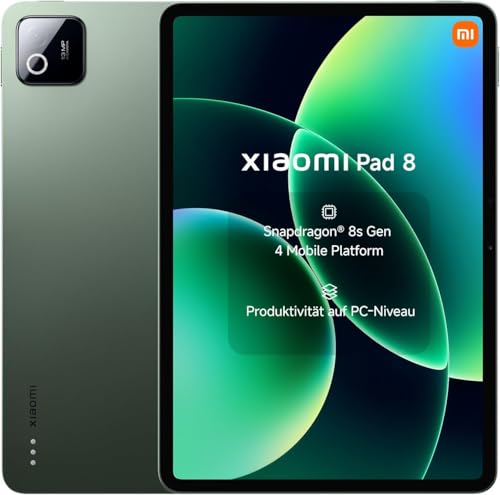
The Xiaomi Pad 8 is the direct successor to the much loved Pad 7, and it keeps everything that made the older model a value champion while quietly upgrading the bits that mattered. The headline 11.2-inch 3.2K 144Hz display returns, now a touch brighter at around 800 nits with Dolby Vision and HDR10 support, and it is still genuinely exceptional for the price. The big change is under the hood: the new Snapdragon 8s Gen 4 is a real leap, around 26 percent faster in single-core and 32 percent faster in multi-core than the Pad 7, comfortably outpacing budget tablets and even some older iPads. The battery grows to 9200mAh with 45W wired fast charging, so a full day of mixed use is no trouble. The all-metal unibody is slimmer at 5.75mm and lighter at 485g, and HyperOS continues to offer polished floating-window multitasking. There are a couple of trade-offs to weigh: the Pad 8 drops the microSD slot, so you need to pick your storage tier up front, and there is no fingerprint sensor unless you step up to the Pad 8 Pro. The software also still needs a little polish in places. But as a pure value proposition for streaming, gaming, and everyday work, the Pad 8 is one of the hardest Android tablets to beat in Australia right now.
Display
8.5
Performance
8
Battery
8
Ecosystem
7.5
Owners
8.5
Critics
8.9
Owners is the 4.7★ Amazon AU rating from 51 reviews, weighted toward the category average when there are few. Critics averages 3 published reviews. Tick marks show the category average.
How we scored it
Display 8.5: 11.2-inch 3.2K IPS LCD at 144 Hz with 800 nits peak per Xiaomi's spec and Expert Reviews, with Dolby Vision on the card; Stuff (5/5) notes a couple of minor panel flaws.
Performance 8: Snapdragon 8s Gen 4 per Xiaomi's spec; Stuff says it outperforms anything in its price range and Notebookcheck (87%) calls dearer tablets practically superfluous.
Battery 8: Provisional: Xiaomi's spec lists 9,200 mAh and 45 W charging but no rated playback hours; Notebookcheck's Wi-Fi test ran well over 20 hours, so the upper middle band.
Ecosystem 7.5: Xiaomi's Focus Pen and Focus Keyboard are sold separately per Stuff and Expert Reviews, with a desktop mode per Notebookcheck; Expert Reviews cites four years of OS updates.
The second-generation Idea Tab Pro is the big-screen Android tablet to buy if you want room to work without paying for an iPad Air or a Galaxy Tab S11. The screen grows to 13 inches and 3.5K resolution, still at up to 144Hz, with a paper-like anti-glare finish that cuts reflections under office lights and makes handwriting with the included Lenovo pen feel less like writing on glass. It is bright enough for a sunny room at 600 nits typical and 800 peak. The bigger change is inside. Qualcomm's Snapdragon 8s Gen 4 replaces the first model's MediaTek chip and is a clear step up for multitasking, split-screen study and mainstream games, and this Australian model pairs it with 12GB of RAM and 256GB of storage, plus a microSD slot that takes cards up to 2TB. Four JBL speakers with Dolby Atmos make it a good lounge-room streaming screen as well as a desk one. The compromises are the familiar ones for the price: it is an LCD, so blacks look grey in a dark room next to the OLED Samsungs above it, there is no cellular version, and Lenovo's Android update window is shorter than Samsung's or Apple's. The keyboard is extra. For study, note-taking and streaming on a big screen, it is the value pick.
Display
8.5
Performance
8
Battery
7
Ecosystem
6.5
Owners
7.8
Owners is the 4.4★ Amazon AU rating from 49 reviews, weighted toward the category average when there are few. Fewer than two published reviews of this exact model, so the owner rating carries that weight too. Tick marks show the category average.
How we scored it
Display 8.5: 13-inch 3.5K IPS LCD at 144 Hz with an anti-glare finish, 600 nits typical and 800 peak on the card; Notebookcheck rates the screen bright and colour-accurate with no PWM flicker.
Performance 8: Snapdragon 8s Gen 4 with 12 GB of RAM on this AU model per the card; Notebookcheck (87%) says it shocks the mid-range class with plenty of processing power.
Battery 7: Provisional: no maker video-playback rating found; 10,200 mAh per Notebookcheck, whose Wi-Fi test ran about 50 minutes longer than Gen 1 but which calls the runtimes only mediocre.
Ecosystem 6.5: Pen included but the keyboard is extra per the card; Notebookcheck flags only four years of security updates and no cellular model; Android tablet apps trail iPadOS.
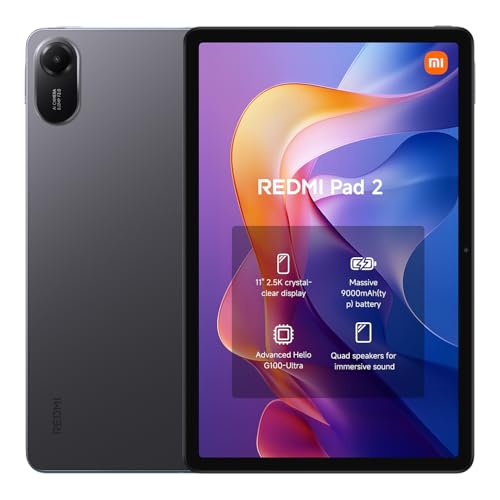
The Xiaomi Redmi Pad 2 is genuinely impressive for the money. For under $300, you're getting an 11-inch 2.5K display running at 90Hz - that's a sharper, smoother panel than tablets costing twice as much just a couple of years ago. The metal body feels solid and doesn't scream budget, Dolby Atmos quad speakers make streaming content sound great, and the 9,000mAh battery comfortably lasts two days of casual use. With 128GB of storage and full Google Play Store access, it handles everything from Netflix binges to casual gaming, note-taking, and browsing without drama. The Snapdragon 7s Gen 3 chip keeps things smooth for everyday tasks. Where it falls short is the camera - serviceable for video calls but nothing more - and the lack of stylus support means it's not built for creative work. But as a pure media consumption and everyday tablet under $300 in Australia, this is the one to beat.
Display
6.5
Performance
5
Battery
7.5
Ecosystem
5.5
Owners
7.7
Owners is the 4.5★ Amazon AU rating from 199 reviews, weighted toward the category average when there are few. Fewer than two published reviews of this exact model, so the owner rating carries that weight too. Tick marks show the category average.
How we scored it
Display 6.5: 11-inch 2.5K IPS LCD at 90 Hz rated 500 nits typical and 600 in outdoor mode per Xiaomi's spec; Notebookcheck says it is not particularly bright and lacks HDR.
Performance 5: MediaTek Helio G100-Ultra per Xiaomi's spec and Notebookcheck, not the Snapdragon 7s Gen 3 on our card; Notebookcheck (78%) lists performance among its weaknesses.
Battery 7.5: Provisional: Xiaomi's spec lists 9,000 mAh and 18 W charging but no rated playback hours; Notebookcheck measured 16 h 04 min of Wi-Fi web browsing, so the middle band.
Ecosystem 5.5: Supports the Redmi Smart Pen per Xiaomi's spec and Notebookcheck, contrary to the card's no-stylus line; no keyboard or desktop mode on the card, and shorter software support than Samsung or Apple.
We rank on the listed specs (chip, memory and storage, display size, resolution and peak brightness), the maker's own battery figures weighed against professional reviews, stylus and keyboard accessory support, the software experience as described by owners, and Amazon AU ratings and reviews. We don't buy or test the tablets. Prices and stock are checked daily on Amazon Australia and rankings re-checked weekly.
Scored on Display 35%, Performance 25%, Battery 20%, Ecosystem and accessories 20%, plus owner ratings and critic reviews
Be realistic about your usage. If you're mostly streaming, browsing, and reading, a budget or mid-range tablet will do you just fine. You only need a premium tablet if you're doing serious creative work, heavy multitasking, or using it as a proper laptop replacement with a keyboard.
Screen Size and Display Quality
Bigger isn't always better. An 11-inch tablet is great for portability and casual use, while 12-13 inch models are better for productivity and drawing. Pay attention to panel type - OLED and mini-LED offer dramatically better contrast and colour than standard LCD, which matters when you're watching content or editing photos.
Consider the Accessory Ecosystem
A tablet's value can change dramatically depending on available accessories. Stylus support turns a tablet into a digital canvas, while a quality keyboard case can replace a laptop entirely. Factor in the cost of these extras - some brands charge a fortune for official accessories.
Storage: Don't Get Caught Short
Base storage on tablets can fill up fast, especially if you're downloading movies or using creative apps. Check whether the tablet supports microSD expansion - Apple tablets don't, so you'll want to buy more storage upfront. Samsung and Amazon tablets generally do support expandable storage.
Check It Ships from Australia
Not everything on Amazon AU ships locally. Always check for 'Ships from and sold by Amazon AU' to avoid lengthy international delivery times and potential warranty headaches. All our picks are verified to ship from within Australia.
Tablets have properly come into their own in Australia, and the line between a tablet and a laptop has never been blurrier. Whether you're sketching with a stylus, bingeing Stan on the couch, or replacing your old laptop entirely, there's a tablet that fits the bill - and your budget.
We've compared the most popular tablets available on Amazon Australia for everything from note-taking and video calls to gaming and streaming, using published specs, professional reviews and owner feedback rather than our own testing. We weighed rated battery life against what reviewers report, display brightness for Aussie sunlight, app performance, and how well each one is reported to handle multitasking when you've got a dozen tabs open alongside a video call.
From flagship powerhouses that rival laptops to affordable slabs that are perfect for the kids or casual browsing, here are the seven tablets that genuinely earn their spot in 2026.
Tablets — Frequently Asked Questions
Can a tablet replace a laptop for university?+
For many uni students, yes - especially an iPad Air or iPad Pro with a keyboard case. Tablets handle note-taking, research, essay writing, and video lectures easily. However, if your course requires specialised software like MATLAB, AutoCAD, or advanced coding environments, you'll still need a laptop. For arts, humanities, and business students, a tablet with a keyboard is a genuinely capable laptop replacement.
What's the difference between iPad and Android tablets?+
iPads generally offer a better app ecosystem, longer software support (5-6 years of updates), and smoother performance. Android tablets from Samsung offer more flexibility with features like split-screen multitasking, expandable storage, and a wider range of price points. Samsung's Galaxy Tab S series is the closest Android competitor to the iPad Pro. For most Australians, the iPad remains the safer choice due to its superior app library.
Is the cheapest iPad worth buying in 2026?+
The base-model iPad with the A16 chip offers excellent value for everyday tasks like browsing, streaming, email, and light productivity. With 128GB of base storage and a capable processor, it's a solid choice for kids, casual users, and anyone who doesn't need the processing power of the Air or Pro models. At its Australian retail price, it's hard to beat for a reliable tablet.
Do I need cellular connectivity on a tablet?+
For most Australians, Wi-Fi-only tablets are sufficient - you can use your phone as a hotspot when you're out. Cellular models cost $200-250 more upfront plus require a separate data plan. They're worth it if you frequently travel, work remotely in areas without reliable Wi-Fi, or want the convenience of always-on connectivity without draining your phone battery.
How much storage should I get in a tablet?+
128GB is the sweet spot for most users - it gives you enough breathing room for apps, photos, and a reasonable media library. If you plan to store large files, use the tablet for creative work, or download lots of content for offline viewing on flights, 256GB is the safer bet. Samsung and Amazon tablets support microSD expansion, which gives you more flexibility.
Found this useful? Share it with fellow Aussies.
Share:
Weekly AU tech deals, in your inbox
We check prices on every product we cover daily. Once a week we send the biggest genuine price drops we spot - the ones worth your attention.